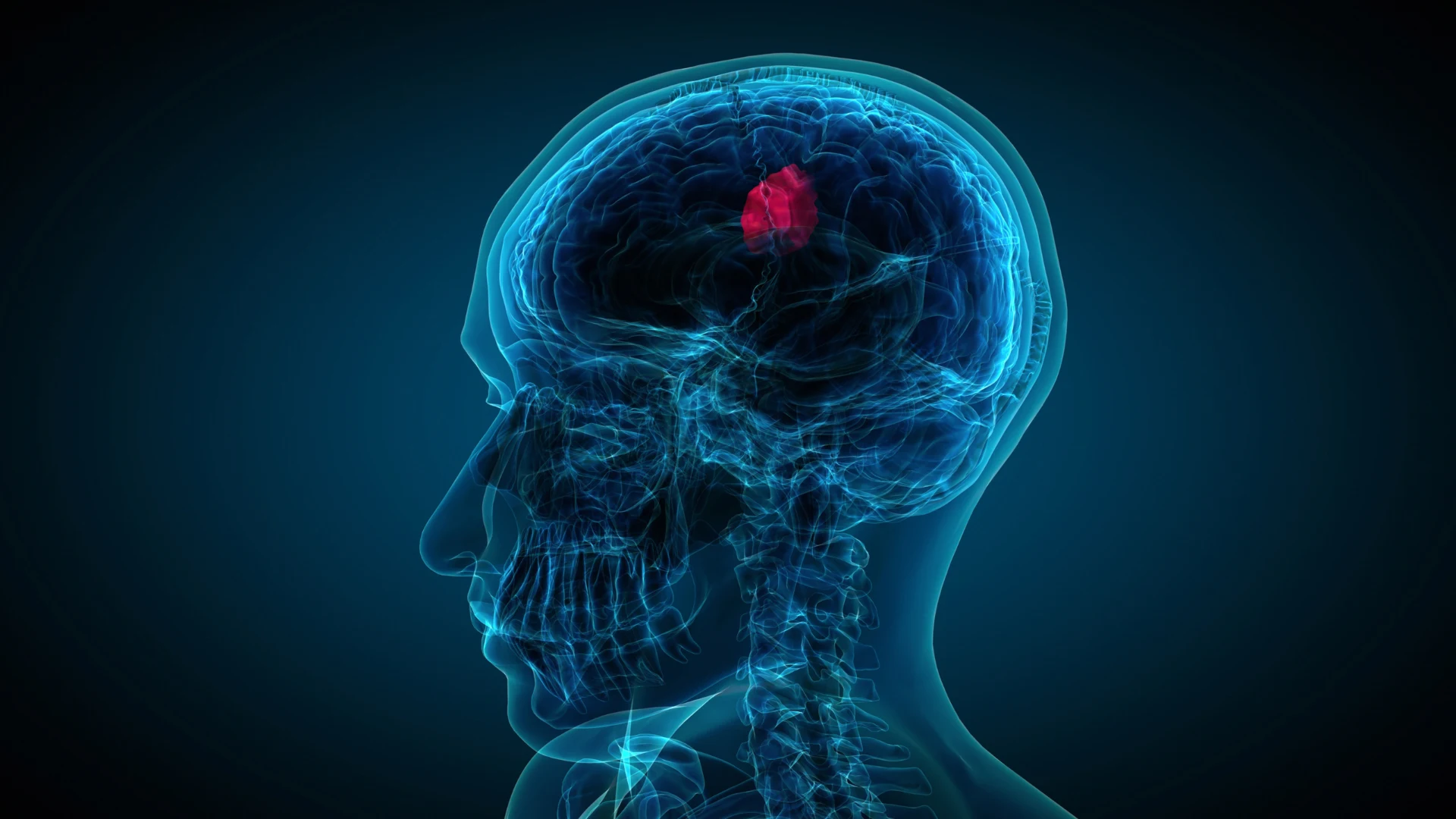
Meningioma Treatment in New York
Our New York meningioma specialists assess your case, beginning with careful monitoring when appropriate and proceeding to surgery only if necessary.
What is a meningioma ?
A meningioma develops on the meninges, the thin layer that covers the brain. Most meningiomas are benign. They grow by pressing on the brain instead of invading it, which is why they grow quite large over time. Many patients only discover their meningioma after undergoing imaging for another issue.
Symptoms can vary based on where the tumor is located. So, two people with the same type of meningioma might experience different symptoms. Identifying its exact location and behavior helps guide treatment decisions.
See how it is treated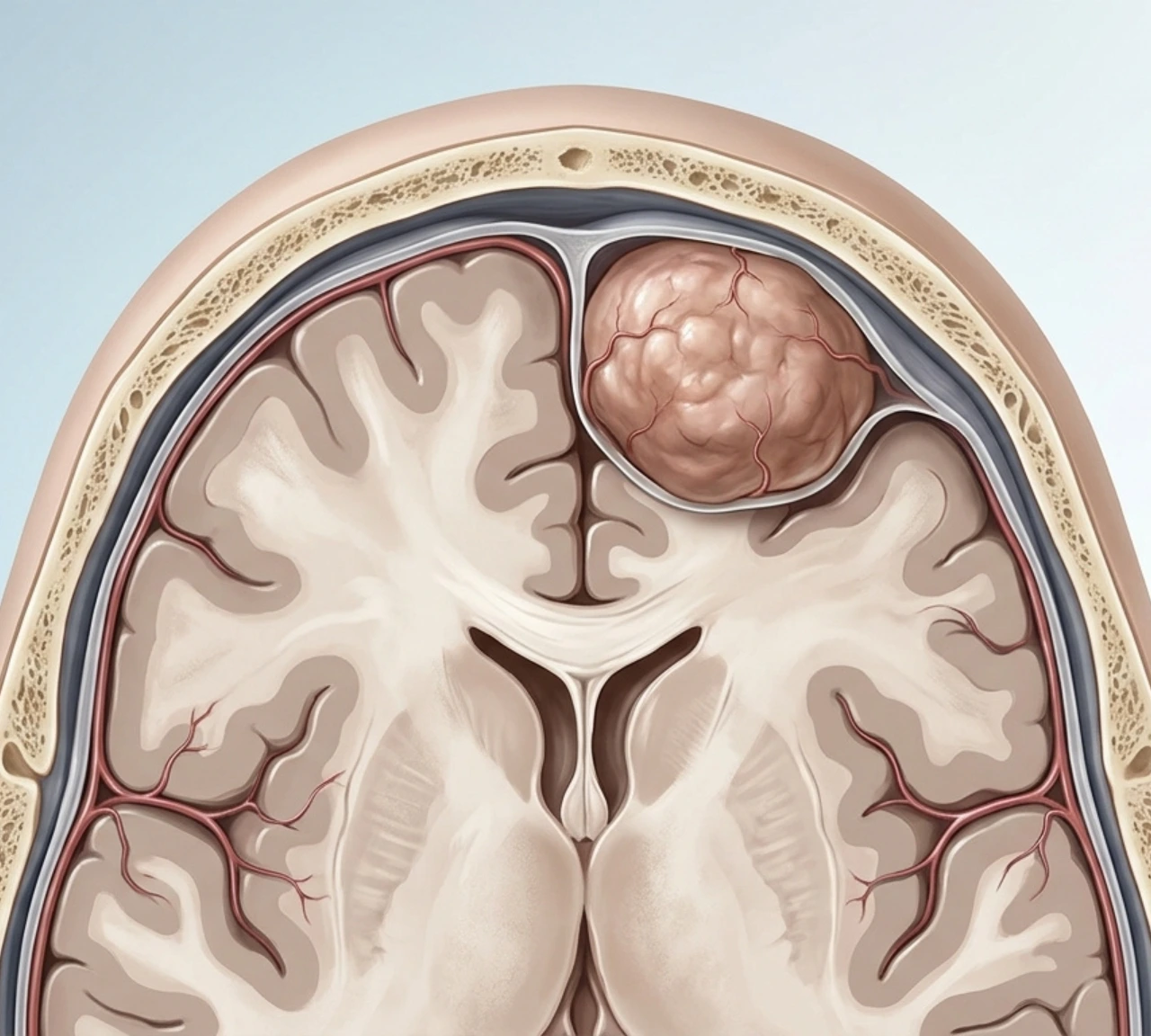
Meningioma symptoms
Meningiomas grow slowly, so symptoms may develop gradually or may not appear at all. Here are the key patterns to be aware of.

Often nothing at all
Many meningiomas cause no symptoms and turn up by chance on a scan ordered for an unrelated reason.

Headaches that have changed
A headache that is new to you or has a different pattern, sometimes feeling worse in the morning or during physical strain.

A first seizure as an adult
A first seizure in adulthood always needs prompt assessment, even when you otherwise feel well and have no other symptoms.

A change tied to one function
Depending on the location, one function might fade. Families might notice changes in vision, smell, hearing, strength on one side, or memory first.
What causes a tumor on the covering of the brain ?
In many cases, the exact cause of a meningioma remains unclear. However, certain factors are known to increase the likelihood of its development.
Book an Appointment →-
01
No identifiable cause
For most people, no specific reason explains why a meningioma developed, and that is worth stating clearly.
-
02
Previous radiation to the head
Radiation to the head, sometimes given years earlier, is the clearest known risk factor for a meningioma.
-
03
Female sex and hormones
Meningiomas are more common in women, and hormonal factors appear to contribute to that pattern.
-
04
Neurofibromatosis type 2
This inherited condition, along with a few related genetic ones, makes multiple meningiomas more likely over a lifetime.
-
05
Recurrence after earlier treatment
A meningioma can return after surgery or radiation, most often at the skull base where surgeons find it harder to achieve full removal; we review complex and recurrent cases here in detail.

How is meningioma diagnosed?
Your history and a physical exam
We go through your symptoms and health history, then check vision, hearing, balance, strength, and memory to locate the tumor.
An MRI we review with you
MRI is the main test and shows the tumor's exact edges; a CT can check whether it touches nearby bone. If a meningioma is small and not causing symptoms, we monitor it with regular imaging.
A review by two specialists
A neurosurgeon and an orthopaedic spine surgeon look at the same images together. They evaluate a meningioma in the head or spine from both viewpoints.
A clear recommendation you understand
Before you go, we set out the recommendation, whether that is monitoring, radiation, or surgery, and the reasoning behind it in plain terms.
Meningioma treatment, from conservative care to surgery
For many meningiomas, doctors often choose to observe instead of operate. Treatment depends on the tumor's growth, symptoms, and location, and in many cases, surgery may not be needed.
Conservative care first
For many meningiomas, this is the whole plan
- Scheduled MRI monitoring when a meningioma is not growing and causing no symptoms, sometimes for years.
- Medication to control seizures or ease swelling when either is a problem.
- Stereotactic radiosurgery or radiation therapy, planned together with radiation oncology.
- Care aimed at a specific symptom, such as vision changes, handled alongside the right specialty.
Surgery, when it is necessary
Our meningioma tumor surgeons favor the least invasive route that treats it
- Craniotomy to remove the meningioma, aiming for complete removal when that is safely possible.
- Skull base approaches for tumors at the base of the brain, where access is delicate.
- Endoscopic and other minimally invasive routes when the location allows them.
- Repeat surgery or radiation if a meningioma returns.

When it cannot wait: a first seizure, a sudden severe headache unlike any before, a sudden loss or change in vision, new weakness on one side of the body, or new confusion or drowsiness. Call 911 or go to the nearest emergency department right away.
Doctors who treat Meningioma in New York
Our meningioma doctors are neurosurgeons and orthopaedic spine surgeons who review each case together, with academic-level training, across the New York metro area.