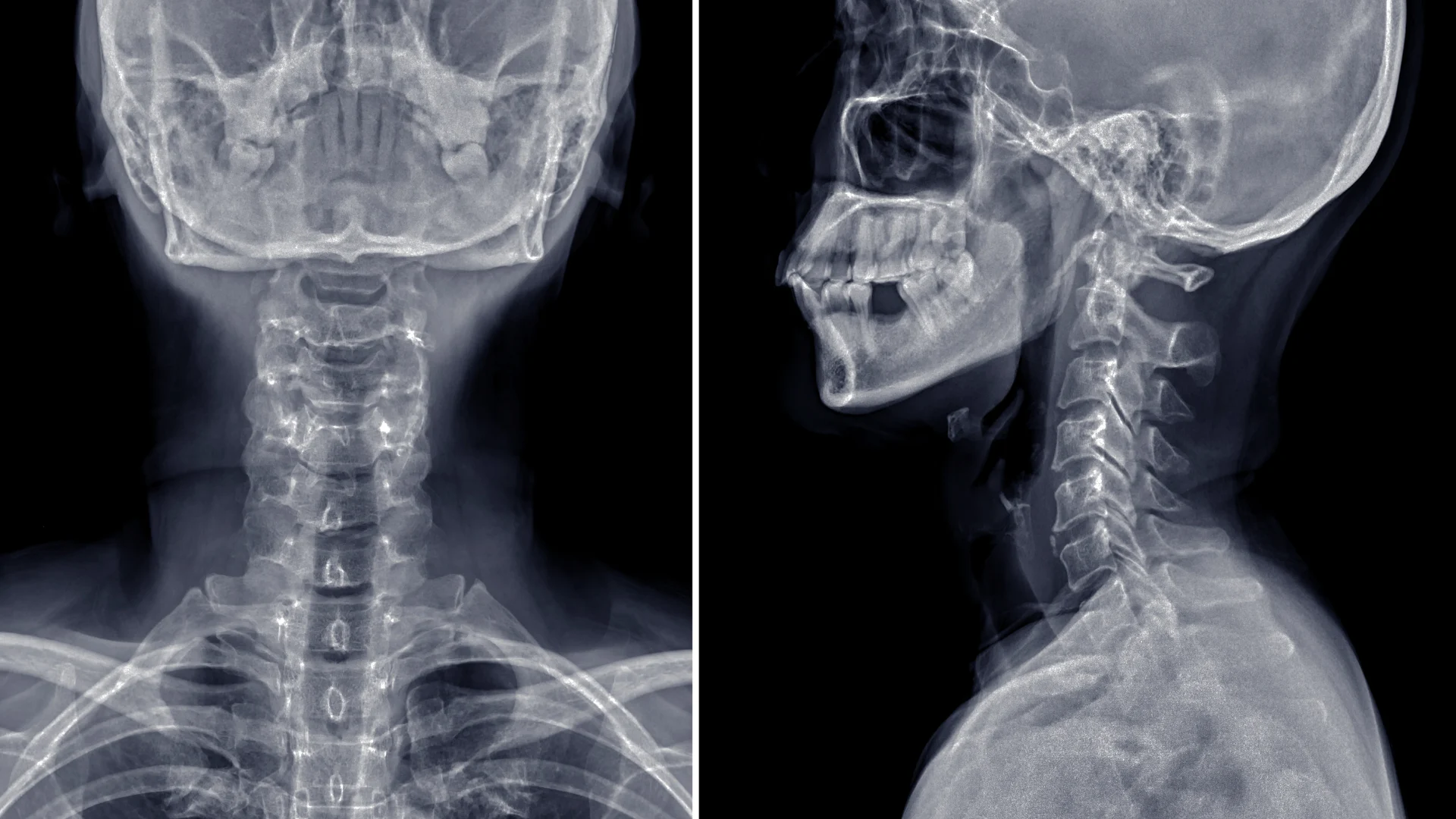
Neck Pain Treatment in New York
Our New York neck specialists treat the everyday causes of neck pain as one team: neurosurgeons and orthopedic spine surgeons reviewing your case together, from stiffness and strain to pain that spreads into the arm.
What counts as neck pain ?
Neck pain can start in the muscles, the joints, a disc, or a nerve, and where you feel it is not always where it begins. Pain that travels into the shoulder or arm usually means a nerve is involved, not just a sore muscle.
Because the neck moves all day and shields the spinal cord and the nerves to your arms, pinning down the source is what makes neck pain treatment effective. Our New York orthopedic neck specialists review the results together.
See how it is treated
Specific Neck Pain Conditions We Treat
Below are the everyday neck conditions we treat in New York. The highlighted ones open a detailed guide of their own; the rest are covered by the care described here.
Neck pain symptoms
Neck pain shows up in a few recognizable patterns. You may have one, or a mix that comes and goes throughout the day.

Pain and stiffness turning your head
A tight, sore neck that catches or limits how far you can turn or tilt, often worse after sleep or desk work.

Pain spreading to the shoulder blade or arm
An ache or burning that runs from the neck into the shoulder blade, or down the arm toward the hand.
Headache at the base of the skull
A headache that gathers where the neck meets the skull and creeps up the back of the head.

Numbness, tingling, or weakness
Tingling, numbness, or a weak grip in the arm or hand is worth prompt evaluation, since it points to nerve involvement.
What causes neck pain ?
Neck pain usually comes from wear, strain, or a nerve under pressure, and often more than one at a time. We examine the whole picture rather than stopping at a single scan finding.
Book an Appointment →-
01
Muscle and joint strain
Everyday posture, sleep position, and long hours on a screen overwork the neck's muscles and joints.
-
02
Wear and arthritis
Discs flatten, and joints roughen with age, a change in the neck often called cervical spondylosis.
-
03
Disc and nerve pressure
A bulging or herniated disc, or a narrowed opening, can press a nerve and send pain down the arm.
-
04
Injury
A fall or a car crash can strain the neck suddenly, as in whiplash, and unsettle the discs and joints.
-
05
Pain after previous neck surgery
Neck pain that returns after an earlier operation calls for a dedicated revision review, beginning with a new diagnosis.

How is neck pain diagnosed?
Exam and history
We start with your medical history, then check how the neck moves and test strength, reflexes, and sensation in the arms.
Imaging, sequenced to the decision
X-ray or MRI is ordered when the exam points to it. We do not run a test whose result would not change what we recommend.
Two specialties, one review
A neurosurgeon and an orthopedic spine surgeon bring neck orthopedic and neurosurgical views to the same case.
Your plan, in plain words
You leave with a clear diagnosis and a plan you understand, from conservative care to advanced surgery
[Meet our physicians]
Neck pain treatment, from conservative care to surgery
- Most neck pain eases with conservative care and time. When an operation is genuinely needed, we choose the least invasive one that safely relieves it.
- Nonsurgical care, first and usually enough.
- How most neck pain resolves.
- Targeted physical therapy to loosen the neck, build support, and correct posture.
Surgery, reserved for the right case
Motion-preserving whenever the neck allows
- Cervical disc replacement that swaps a worn disc for an implant that keeps the neck moving.
- Anterior cervical discectomy and fusion, reaching the spine from the front to relieve a compressed nerve or cord.
- Posterior decompression that clears pressure off a nerve or the cord from behind.
- Revision surgery when pain continues after an earlier neck operation.

When it cannot wait: new clumsiness in the hands, unsteady walking, weakness spreading through the arms or legs, or any change in bladder or bowel control can mean the spinal cord is under pressure. Severe neck pain right after a serious injury also needs urgent care. Call 911 or go to the nearest emergency department now.
Doctors who treat neck pain in New York
Our neurosurgeons and orthopedic spine surgeons train at academic centers and review each case side by side for patients across the New York metro area.
Marc Dyrszka, MD

Yigal Samocha, MD

Joshua Adjei, MD

Simon Morr, MD

Debra Petrucci, MD

Jay Reidler, MD

John A. Grant, MD

John F. Morrison, MD

Murat Cosar, MD

M. Mehdi Kazmi, MD

Nicholas Post, MD