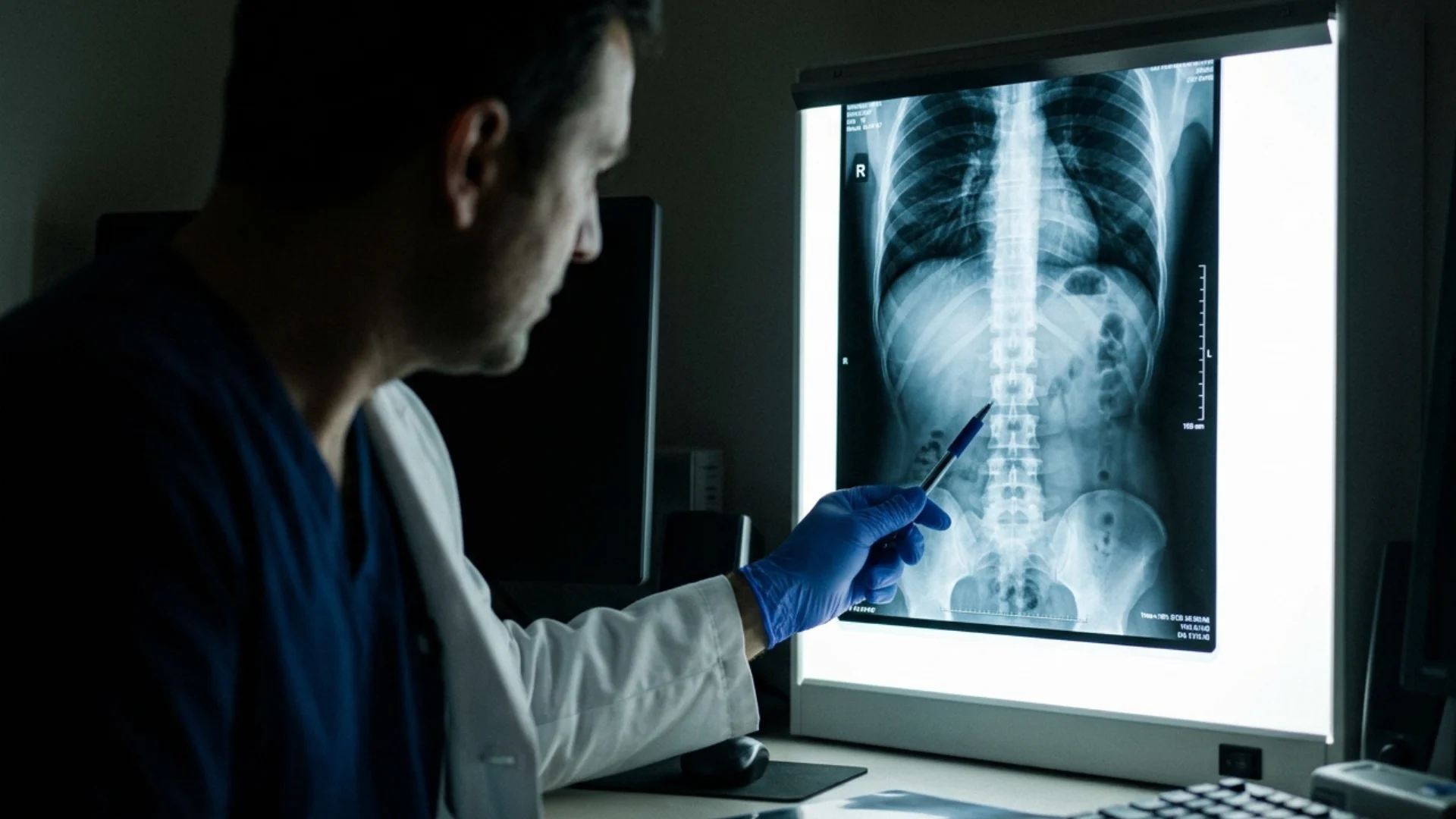
Failed Hardware Removal Surgeons in New York
Our New York failed hardware removal surgeons look at your whole case together, starting with what an earlier operation left behind.
What is a failed back surgery ?
Pain that continues or returns after spine surgery is a diagnosis in its own right. It is not a verdict on you or on your first operation. Doctors call it failed back surgery syndrome, and when the metal itself is the problem, Failed Spinal Hardware. We start by working out which it is.
An operation can succeed technically and still leave symptoms. The original pain source may have been only partly identified, a neighbouring level may now carry the load, or the spinal hardware may have loosened. Pinning down the cause is what makes treatment effective.
See how it is treated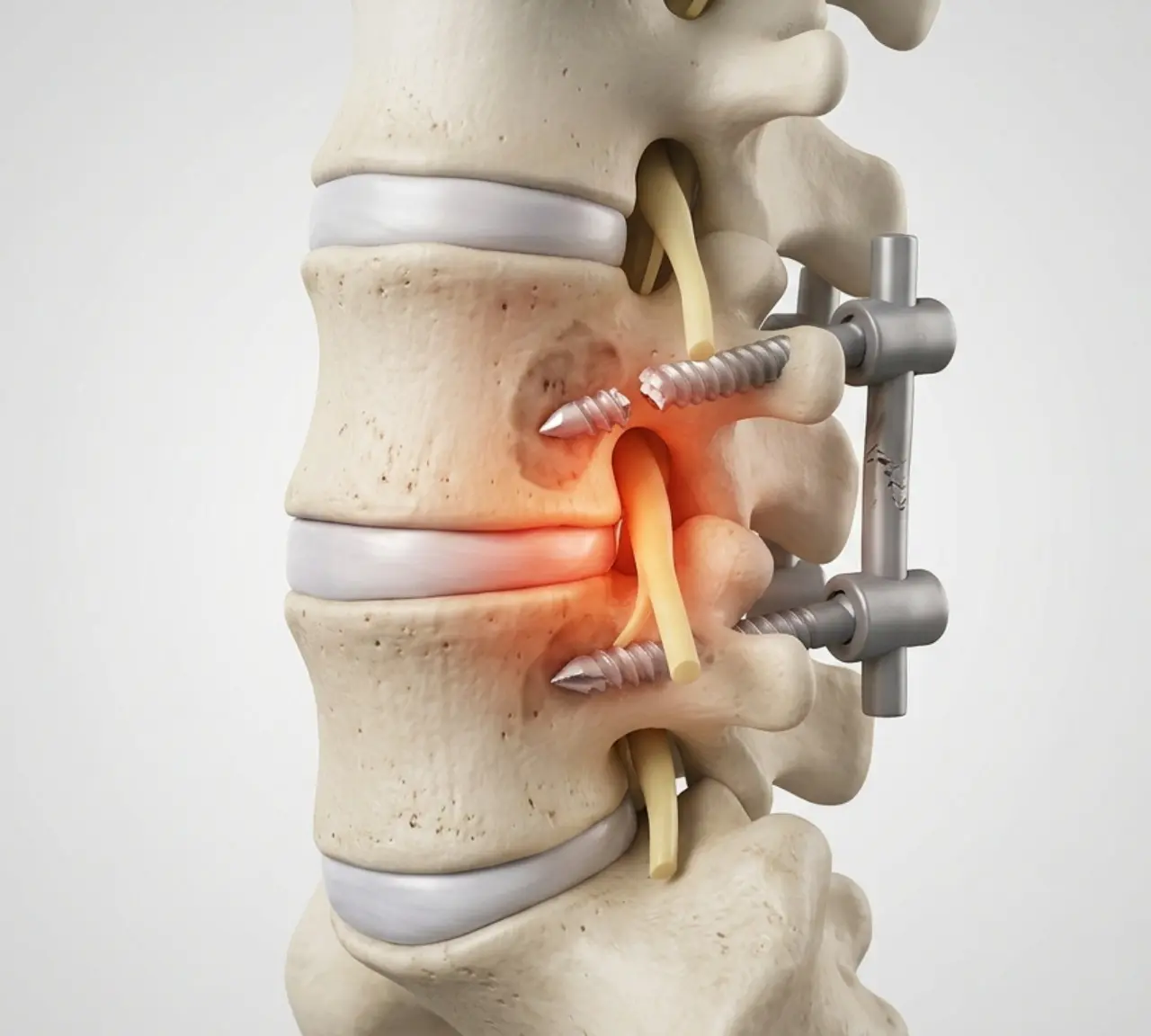
Failed back surgery symptoms
With failed back surgery, the pattern of your pain and when it changed tell us a lot. A few patterns point the way.

Pain that never fully left
The same pain as before the operation, or a new pain that arrived during recovery and never left.

Symptoms that returned after months of relief
A stretch of real relief, then a slow slide back toward where you started, or somewhere worse.

A specific spot you can point to
Focal soreness over back fusion hardware, sometimes worse with movement or in cold weather.
New numbness or weakness
A new change in an arm or leg that was not there before your surgery needs prompt evaluation.
What causes persistent pain after spine surgery ?
Persistent pain after surgery has several causes, and they are treated very differently. The first step is finding which one you have.
Book an Appointment →-
01
The source was missed
The pain source was only partly identified, or only partly treated, so some of it was left behind.
-
02
The next level wears faster
Adjacent segment breakdown, where the level beside a fusion takes up load and wears out sooner.
-
03
Hardware that has loosened or shifted
Screws, rods, or a stimulator lead that have loosened, shifted, or rest where they irritate tissue, including a cervical fusion hardware failure.
-
04
Scar tissue around a nerve
Scar tissue that forms around a nerve after the operation and tethers or pinches it.
-
05
A second diagnosis missed all along
A separate problem that was present from the start and never identified. These difficult cases are the core of our revision work.

How is failed back surgery diagnosed?
Listening to your history
We go through your symptoms and how they have changed since surgery. Your account often holds the first clue.
Reading your old records
We start by reading your previous operative reports and original imaging rather than ordering a new scan first, because what was done and what was found is often the missing piece.
Reviewing your case together
A neurosurgeon and an orthopaedic spine surgeon review your case together. One weighs the nerves and soft tissue, the other the bone, alignment, and hardware.
Planning your next step
You leave knowing the cause and how we move forward: an injection to confirm the source, a new therapy plan, or a revision review.
Failed back surgery treatment, from conservative care to surgery
Finding what is actually wrong comes first, and for many patients that alone changes the plan. Treatment runs from targeted injections to revision surgery.
Diagnosis and non-surgical care
Where most cases start, and many are settled
- A full review of your prior records, imaging, and operative reports.
- Targeted injections used to confirm the true source of the pain.
- A rebuilt therapy and medication plan around what we find.
- Management of nerve-related pain without more surgery, when that is the right step.
Revision surgery, matched to the cause
Only once the source is confirmed
- Revision decompression where narrowing remains or has returned.
- Hardware removal or replacement when it is the confirmed source.
- Extension or reconstruction of a fusion for adjacent level breakdown.
- Removal or revision of a spinal stimulator system.

When it cannot wait: fever, redness, or drainage from a surgical site, rapidly worsening weakness in a limb, or new loss of bowel or bladder control. Call 911 or go to the nearest emergency department now.
Doctors who treat Failed Back Surgery & Failed Hardware in New York
Our neurosurgeons and orthopaedic spine surgeons review every revision case together, with academic-level training, for patients throughout the New York metro area.