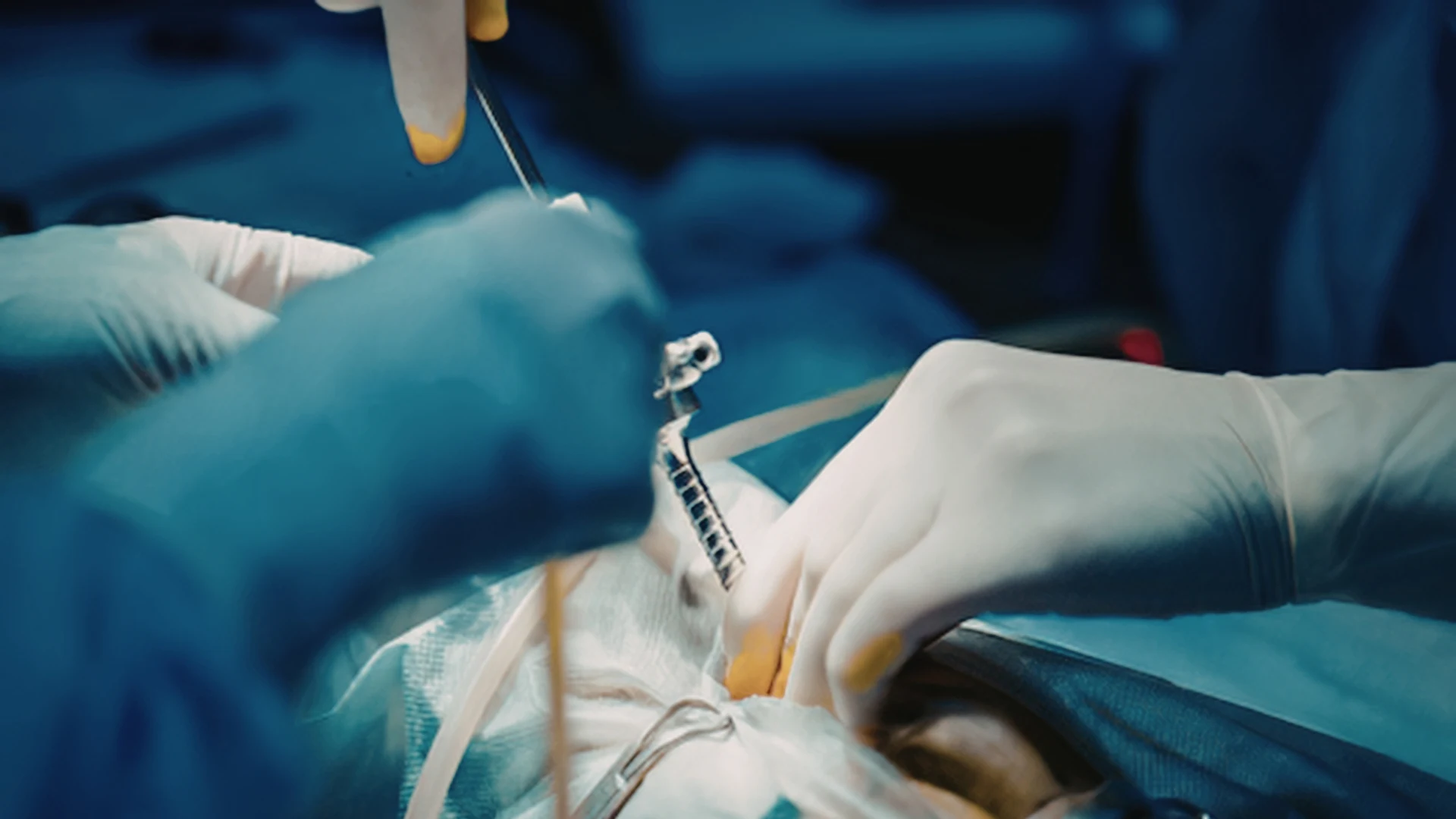
Minimally Invasive & Advanced Surgical Technology in New York
Our team provides minimally invasive spine surgery in New York, planning each case together and starting with the least invasive option that can safely work.
What is minimally invasive spine surgery?
Minimally invasive does not mean a smaller version of the same operation. It means addressing the problem while minimizing disruption to the muscles that support your spine. Traditional spine surgery often retracts the surrounding muscle to access the bone, and much of the recovery involves healing the affected muscle tissue, not just the spine.
Using a microscope, camera, or navigation system in a narrow channel changes the recovery process. However, the operation’s goals stay the same. The outcome still depends on an accurate diagnosis and treatment at the correct level.
See how we approach it
Who is minimally invasive surgery for?
Four situations lead people here, and the last one explains the need for second opinions.

You want the least invasive operation
You need spine surgery and want the least invasive procedure that will work.

You have one clear problem
A single well-localized finding, one disc, one nerve exit, one level.

Recovery matters to you
Work, caring responsibilities, or returning to activity may all depend on muscle healing.

Someone told you it is too complex
Sometimes it's true, and sometimes it's worth getting a second opinion. A new weakness needs prompt evaluation.
How minimally invasive & advanced surgical technology is performed ?
These technologies support the operation. They enhance visualization and guide instruments along a planned route. However, they do not replace knowledge of anatomy or surgical skill.
Operating microscope
Light and magnification let the surgeon work accurately through a smaller opening.
 01
Endoscopic surgery
Endoscopic spine surgery uses a camera in a narrow tube inserted through the smallest openings.
02
Tubular retractors
Pass between muscle fibers rather than cutting across them, allowing the muscle to fall back.
03
Computer navigation
Computer-navigated spine surgery tracks instruments against imaging in real time to guide placement.
04
Robotic assistance
Robotic spine surgery maintains instrument precision, which is vital when deformities or past surgeries disrupt key landmarks.
05

How we determine whether minimally invasive & advanced surgical technology is right for you
Your history and examination
We listen to what you can no longer do, then examine strength, reflexes and sensation.
Imaging with restraint
Not every problem should be approached this way, and we will say so. A large deformity, significant instability, or multiple levels requiring direct access can make an open approach more appropriate. Choosing a smaller incision anyway would be the wrong decision.
Two specialties, one plan
Neurosurgeons and orthopaedic spine surgeons agree on the route and level before anything is scheduled.
The plan, explained in plain language
You learn about the recommended route, alternatives, recovery options, and whether technology offers any benefits to your operation.
What we try before minimally invasive & advanced surgical technology surgery
These are tools, not a separate specialty. The goal is the least invasive approach that safely achieves the result, and sometimes that is a conventional operation.
Conservative care
Surgery is considered only after the diagnosis has been reviewed carefully.
- Checking whether the problem is localized enough
- Imaging reviewed for the planned route
- Compare conventional approach and surgical options
- Complete physical therapy, medication, or injections first when they remain appropriate
Surgery, when needed
The procedure is selected based on the problem, not the technology used to perform it.
- Microscopic decompression or discectomy through a focused opening
- Endoscopic discectomy or decompression for selected disc and nerve problems
- Tubular minimally invasive fusion when stabilization is required
- Navigated and robotic spinal fusion, especially in previously operated spines

When to call us after surgery: fever, redness, swelling, or drainage from the incision, clear fluid leaking from the wound, a severe headache when you sit or stand, new weakness, or loss of bowel or bladder control. Call 911 or go to the nearest emergency department now for new weakness or bowel and bladder changes.