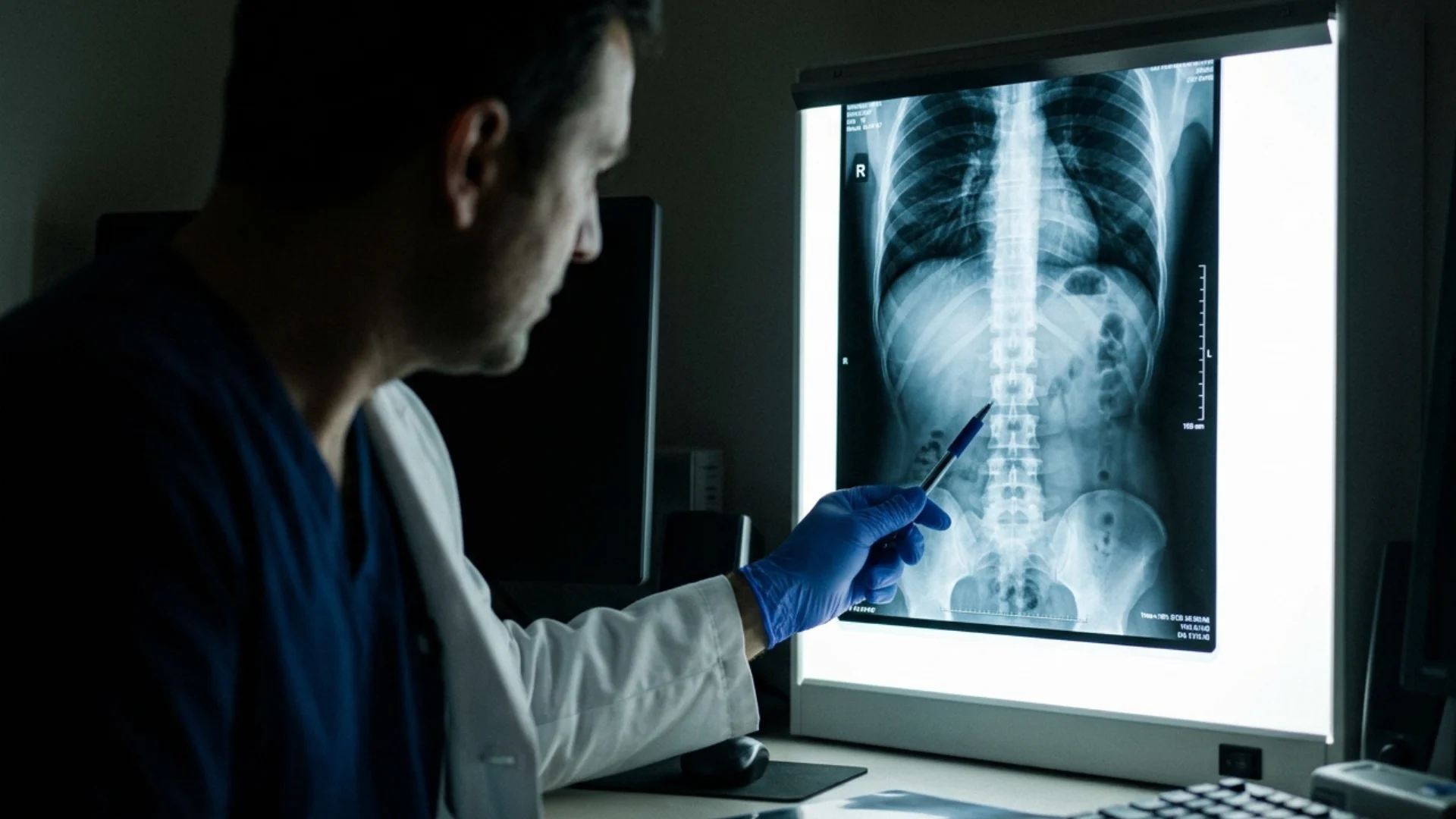
Spine Trauma & Fractures Treatment in New York
Our New York spine trauma doctors review your case together, starting with the least invasive care that can protect your spine and nerves.
What is spine trauma ?
Spine trauma is about stability, not only a broken bone. The vertebrae, discs, and ligaments form a protective column around the spinal cord. When an injury breaks bone or tears a ligament, that column can shift and press on the cord or nerves, causing symptoms in the arms or legs.
In everyday language, a ‘broken back’ or ‘back trauma’ usually means a fractured vertebra. Because ligament damage can also make the spine unstable, treatment depends on identifying the injured level, neurologic involvement, and overall stability.
See how it is treated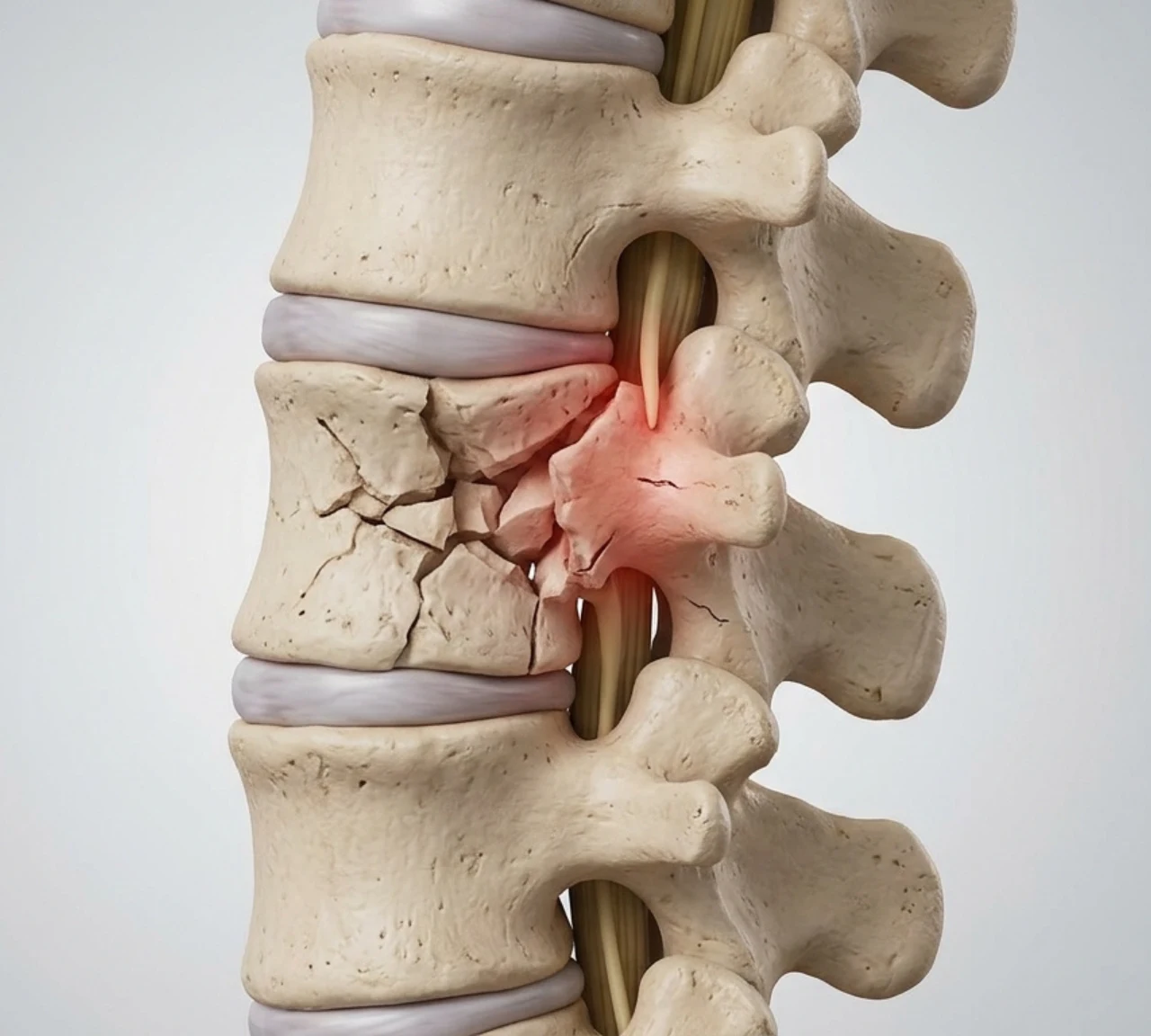
Spine trauma symptoms
Spine trauma symptoms usually sit at one level and change sharply with position or weight.
Pain at one level
Sudden, severe pain after a fall or accident, with marked tenderness directly over the spine.

Pain with movement
Standing, turning, walking, or putting weight through the spine sharply worsens pain and limits movement.

Numbness or weakness
Pins and needles, reduced feeling, heaviness, or weakness in an arm or leg. New weakness deserves prompt evaluation.

Bruising or shape change
Bruising, swelling, or a visible step or bulge in the line of your spine.
What causes a broken back ?
Most spine trauma involves the neck or the upper back, and the same force lands differently depending on age and bone quality. We look at how the injury occurred alongside your symptoms and imaging, not just a single finding on a scan.
Book an Appointment →-
01
01. Falls
The most common mechanism and the leading cause of spine trauma in older adults.
-
02
02. Road collisions
Car, motorcycle, and bicycle collisions can transfer forces through the spinal column.
-
03
03. Sports injuries
Contact sports, diving, and high-impact recreation can fracture bone or tear stabilizing ligaments.
-
04
04. Fragile bone
Osteoporosis can allow a small force to fracture a weakened vertebra.
-
05
05. A changed spine
A stiffened, fused, or previously operated spine can fracture in unusual patterns and needs dedicated review.

How is spine trauma diagnosed?
A thorough exam
We find out how the injury occurred, then check strength, reflexes, and sensation to determine whether nerves are involved.
Imaging, explained for you
Repeat imaging is timed to the question being asked, so we do not re-scan a stable injury simply because time has passed.
Team review
A neurosurgeon and an orthopedic spine surgeon review the same injury together, so stability and nerve risk are both accounted for.
Your plan, shared in plain language
We explain whether the spine is stable, what the images show, and why monitoring, bracing, or surgery is appropriate.
Spine trauma treatment, from conservative care to surgery
Treatment depends first on stability. Stable fractures are often braced and monitored, while unstable injuries or nerve involvement usually require surgery.
Conservative care for stable injuries
Close monitoring while the spine heals
- Bracing and activity restriction for stable injuries.
- Pain control while the bone heals.
- Monitored imaging to confirm the injury is not shifting.
- A guided return to activity, with bone health assessment where fragile bone was a factor.
Surgery, when it is needed
For unstable injuries and nerve pressure
- Stabilization and fixation for unstable fractures.
- Decompression where bone or disc has entered the canal.
- Minimally invasive fixation placed through small openings, where suitable.
- Reconstruction for complex or multi-level injury, including through a previously fused spine.

When it cannot wait: after any significant fall or collision, neck or back pain with numbness, tingling, weakness, or loss of bowel or bladder control needs emergency care. Call 911, and do not move the injured person unless they are in immediate danger.
Doctors who treat Spine Trauma & Fractures in New York
Our New York orthopedic back surgeons and neurosurgeons see patients across the metro area, and neither specialty plans a spine trauma case without the other.