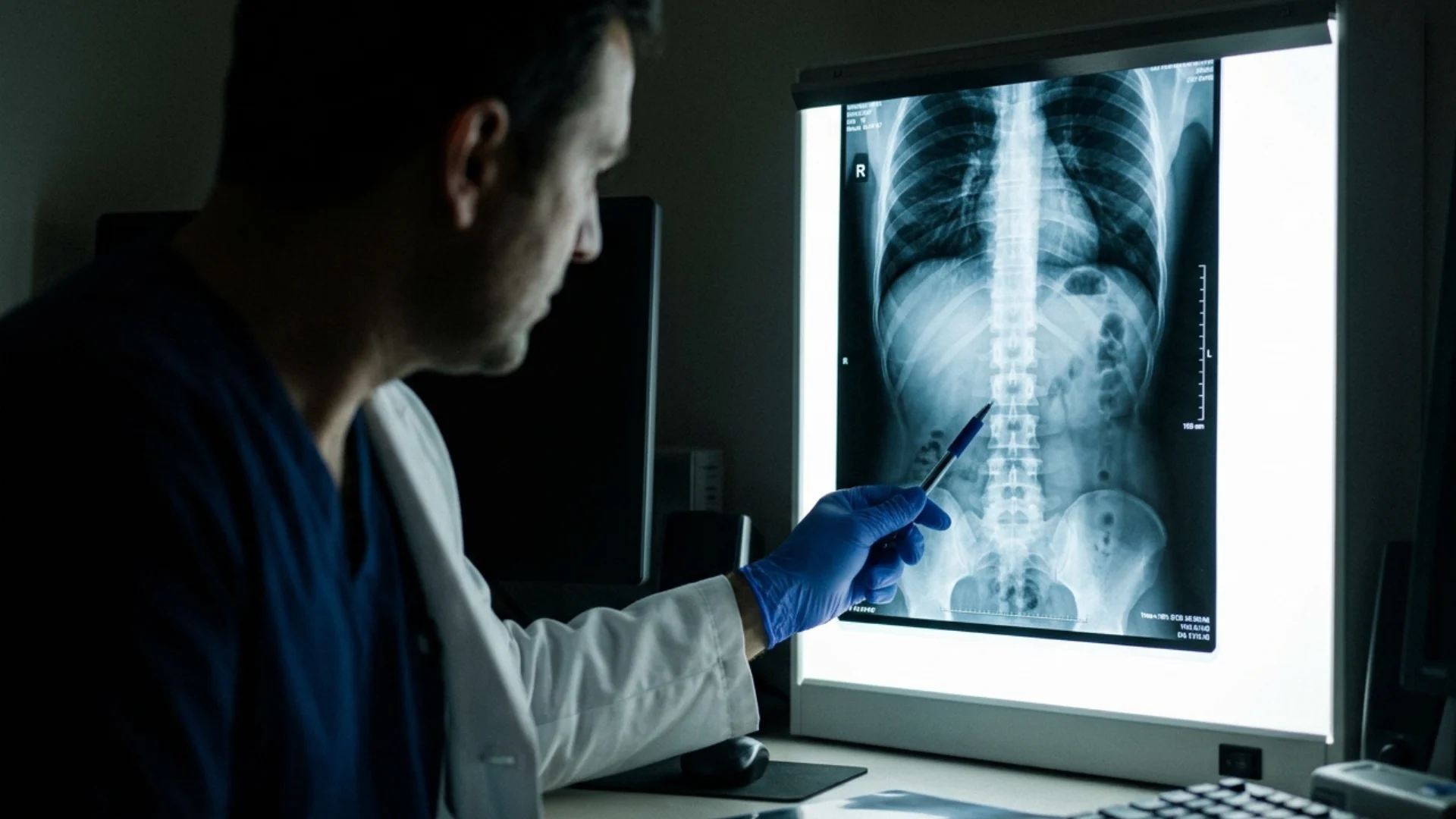
Foraminal Stenosis Treatment in New York
Our New York foraminal stenosis doctors review your case as one team, starting with the least invasive care that can help.
What is foraminal stenosis ?
Foraminal stenosis is a narrowing of the small openings where nerve roots exit the spine, called the foramina. When one of these openings tightens, the nerve passing through it can be pinched or irritated, so the pain is felt where that nerve travels, not at the spine itself.
Because it affects one nerve at its exit, the pinched feeling usually follows a clear pattern on one side. That sets it apart from general spinal stenosis, which narrows the central canal more broadly. Pinpointing the exact level and side is what makes foraminal stenosis treatment effective.
See how it is treated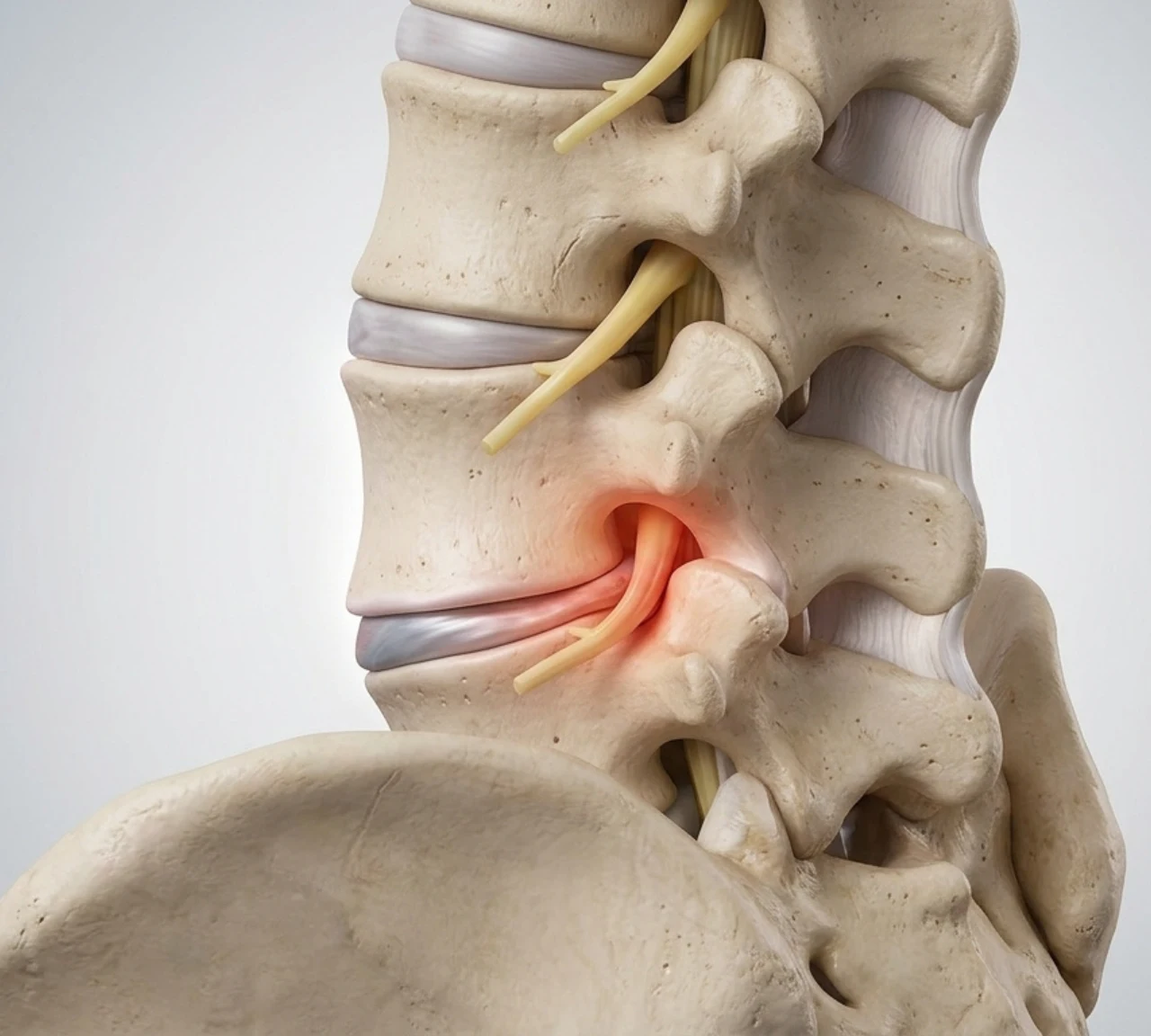
Foraminal stenosis symptoms
Foraminal stenosis symptoms usually follow one nerve on one side, felt away from the spine, in an arm or leg.
Pain down one limb
Pain that begins near the spine and runs down one arm or leg, following the pinched nerve.

Numbness or tingling
Pins and needles, or a patch of skin that feels dulled, in the specific area that one nerve supplies.

Weakness in one area
A weaker grip or a foot that catches can mean the nerve is affected and deserves prompt evaluation.

Worse in certain positions
Reaching, leaning back, or turning toward the tight side can trigger the pain, and changing position often eases it.
What causes foraminal stenosis ?
Foraminal narrowing usually builds up slowly, as the spine ages and more than one change adds up at the same time. We look at the whole picture, not just one finding on a scan, because we base treatment on what is actually crowding the nerve.
Book an Appointment →-
01
Disc height loss
As a disc ages and flattens, the opening above and below it shrinks, the most common reason the foramen narrows.
-
02
Bone spurs
Extra bone that grows along worn vertebrae, called osteophytes, can crowd into the space the nerve needs.
-
03
Facet joint arthritis
The small joints at the back of the spine thicken and enlarge with wear, narrowing the nearby nerve opening.
-
04
Herniated or bulging disc
Disc material that pushes out can press directly into the exit opening where the nerve leaves the spine.
-
05
After injury or previous surgery
A fall or accident, a fracture, or changes after earlier spine surgery can narrow the foramen and deserve a dedicated review.

How is foraminal stenosis diagnosed?
A focused exam
We listen to your story first, then test strength, reflexes, and sensation to map exactly which nerve root is involved.
Imaging, read with you
MRI shows the nerve openings most clearly. Bring any scans you have; nerve studies are added only when they would change the plan.
Team review
A neurosurgeon and an orthopedic spine surgeon review the same images together, so the diagnosis reflects both perspectives.
Your plan, explained in plain language
You leave knowing which nerve is pinched, why, and every option, from conservative care to advanced surgery
Foraminal stenosis treatment, from conservative care to surgery
Most foraminal stenosis is managed without surgery. When an operation is the right answer, we favor the smallest procedure that safely frees the nerve.
Conservative care first
- Where nearly every plan starts.
- Activity changes to avoid the positions that keep provoking the nerve.
- Physical therapy to improve posture and take the load off the compressed nerve root.
- Medication to calm inflammation and nerve-related pain.
Surgery, when it is the answer
Minimally invasive and motion-preserving whenever possible
- Foraminotomy to open the narrowed foramen and free the pinched nerve, preserving nearby structures.
- Laminectomy to remove the bony arch and widen the space when the narrowing is broader.
- Motion-preserving options that restore disc height while protecting how the spine moves.
- Fusion, reserved for genuine instability or severe structural damage.

When it cannot wait: rapidly worsening weakness in an arm or leg, new problems with coordination, walking, or hand control, or any loss of bowel or bladder control can signal serious nerve or spinal cord involvement. If this is happening, call 911 or go to the nearest emergency department right away.
Doctors who treat Foraminal Stenosis in New York
Our foraminal stenosis specialists are neurosurgeons and orthopedic spine surgeons with academic-level training who review your case together for patients across the metro area.
Debra Petrucci, MD

Jay Reidler, MD

John F. Morrison, MD

Joshua Adjei, MD

M. Mehdi Kazmi, MD

Marc Dyrszka, MD

Murat Cosar, MD

Nicholas Post, MD

Simon Morr, MD

Yigal Samocha, MD