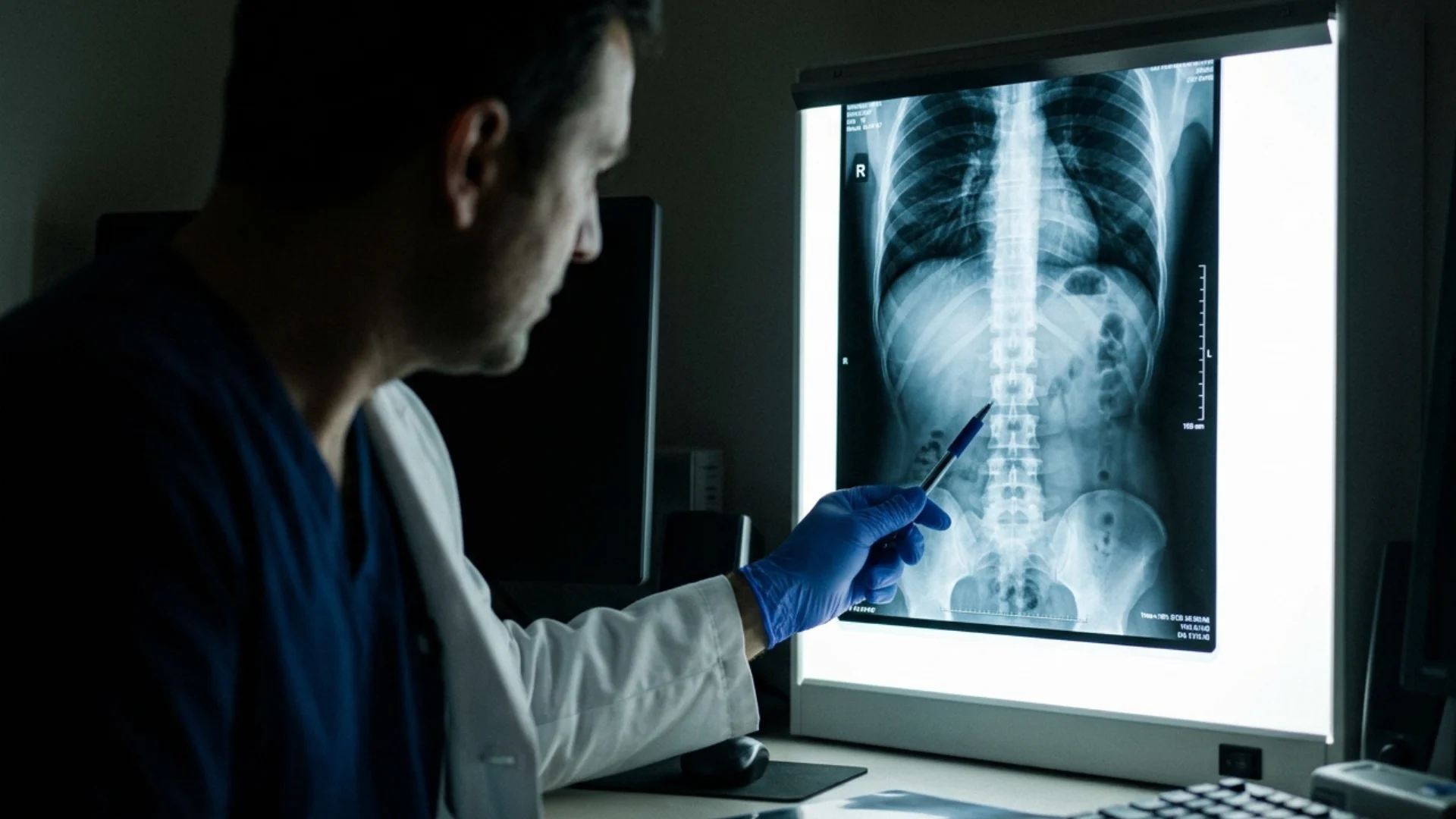
Spinal Canal Stenosis Treatment in New York
Our New York spinal canal stenosis doctors combine their perspectives to identify the least invasive treatment appropriate for your condition.
What is spinal canal stenosis ?
Spinal canal stenosis is narrowing of the central spinal canal, where the spinal cord and nerve roots travel. When the canal narrows, nerves have less room, which can cause pain, numbness, weakness, or walking difficulty. Lumbar stenosis usually affects the legs, while cervical stenosis may affect the arms, hands, and balance.
This differs from foraminal stenosis, where a side canal narrows around a single nerve root, and from myelopathy, where the spinal cord itself is compressed. Understanding which structures are narrowed, not pain location alone, is what makes spinal stenosis treatment work.
See how it is treated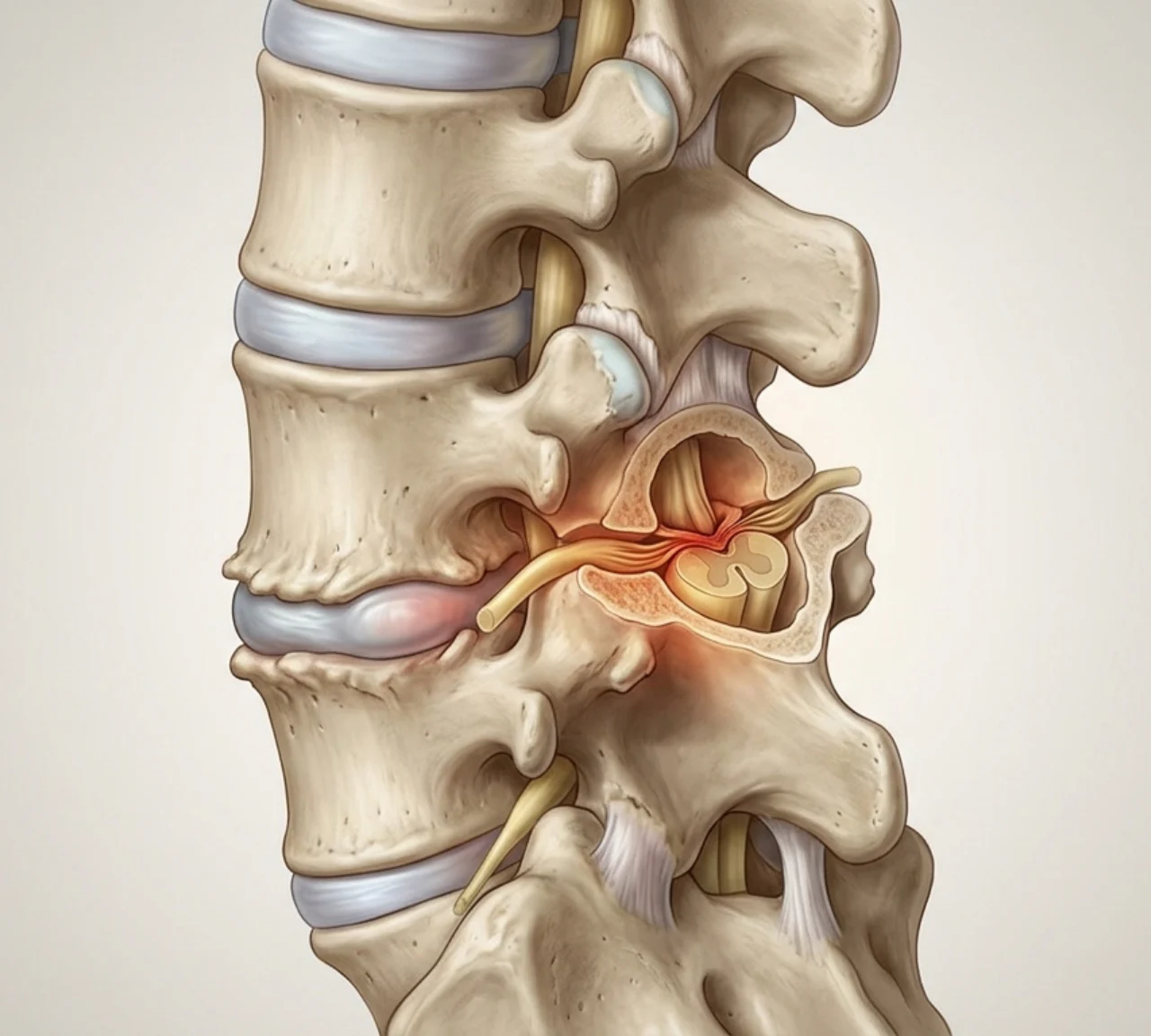
Spinal stenosis symptoms
Spinal canal stenosis can cause low back pain, but the more typical pattern is leg symptoms that worsen with standing or walking and improve with sitting or bending forward.
Leg pain or cramping when walking
Sitting or leaning forward, such as onto a shopping cart, opens the canal and lets you walk farther.
Relief when you lean forward
Bending forward or leaning on a shopping cart widens the canal slightly and lets you walk farther.
Numbness or tingling in the legs
A dull, wooden, or pins-and-needles feeling can spread into the buttocks, legs, or feet, often on both sides.
Clumsy hands or unsteady walking
Unsteadiness or weakness that affects walking deserves prompt evaluation, especially if it is new or getting worse.
What causes narrowing of the spinal canal ?
Narrowing of the spinal canal can develop from bone, disc, joint, or ligament changes, and often from several at once. We evaluate the entire picture rather than assuming one imaging finding explains your symptoms.
Book an Appointment →-
01
01. Age-related arthritis and thickened ligaments
Worn joints and stiffened ligaments crowd the canal, the most common cause in older adults.
-
02
02. Herniated or bulging disc
A disc pressing backward reduces space at the front of the canal and can press on a nerve.
-
03
03. Degenerative disc disease
As discs lose height, the vertebrae settle closer together, and the canal narrows further.
-
04
04. Bone spurs and vertebral slippage
Extra bone at the joints, or one vertebra shifting on another, tightens the canal with movement.
-
05
05. Previous surgery or complex narrowing
Scar tissue, hardware, or a canal not fully opened calls for dedicated revision review.
How is spinal canal stenosis diagnosed?
Your initial assessment
We ask how far you can walk and what relieves the symptoms, then examine strength, reflexes, sensation, gait, and circulation.
Selective imaging review
MRI or CT shows the narrowing, and injections are used to confirm which level is responsible, not to postpone a decision.
Neurosurgical and orthopedic insight
A neurosurgeon and an orthopedic spine surgeon review the same images and agree on which level explains your symptoms.
Your personalized treatment plan
We explain which level is narrowed, what we recommend first, and what would change that recommendation.
Spinal canal stenosis treatment, from conservative care to surgery
Narrowing is structural, so nonsurgical care manages symptoms rather than widening the canal. Surgery is what changes the anatomy, and most patients start without it.
Conservative treatment
Care that starts without an operation
- Physical therapy for spinal motion, core and back strength, and endurance.
- Slowly progressive aerobic activity such as cycling or swimming.
- Medication for inflammation or nerve-related pain.
- Image-guided injections for pain that travels along a nerve.
Surgical treatment
When the canal must be reopened
- Laminectomy to remove bone and ligament and reopen the canal.
- Decompression of a specific level, sometimes with removal of part of a disc or facet joint.
- Spinal fusion when a slipped or unstable vertebra is part of the problem.
- Minimally invasive techniques through smaller incisions when suitable.

When it cannot wait: loss of bowel or bladder control, new numbness in the inner thighs or groin, or weakness in both legs that is worsening quickly can indicate cauda equina syndrome. Call 911 or go to the nearest emergency department right away.
Doctors who treat Spinal Canal Stenosis in New York
Spinal stenosis specialist surgeons, fellowship-trained in neurosurgery and orthopedic spine, see patients across the New York metro area and review every case as a pair.
Debra Petrucci, MD

Jay Reidler, MD

John F. Morrison, MD

Joshua Adjei, MD

M. Mehdi Kazmi, MD

Marc Dyrszka, MD

Murat Cosar, MD

Nicholas Post, MD

Simon Morr, MD

Yigal Samocha, MD