
Syringomyelia Treatment in New York
Our New York syringomyelia specialists work as a team, treating the blockage causing the fluid issue, not just the cavity in the cord.
What is syringomyelia ?
Syringomyelia occurs when fluid forms inside the spinal cord rather than beside it. This key fact distinguishes it from other spinal cysts and explains its unique behavior. The fluid collects in a cavity known as a syrinx, which can expand over time.
When spinal fluid cannot circulate properly, it builds up in the cord, leading to a gradually expanding cavity. This explains the unusual pattern: pain and heat sensations may decrease while light touch remains. Identifying the blockage is crucial for determining the appropriate treatment.
See how it is treated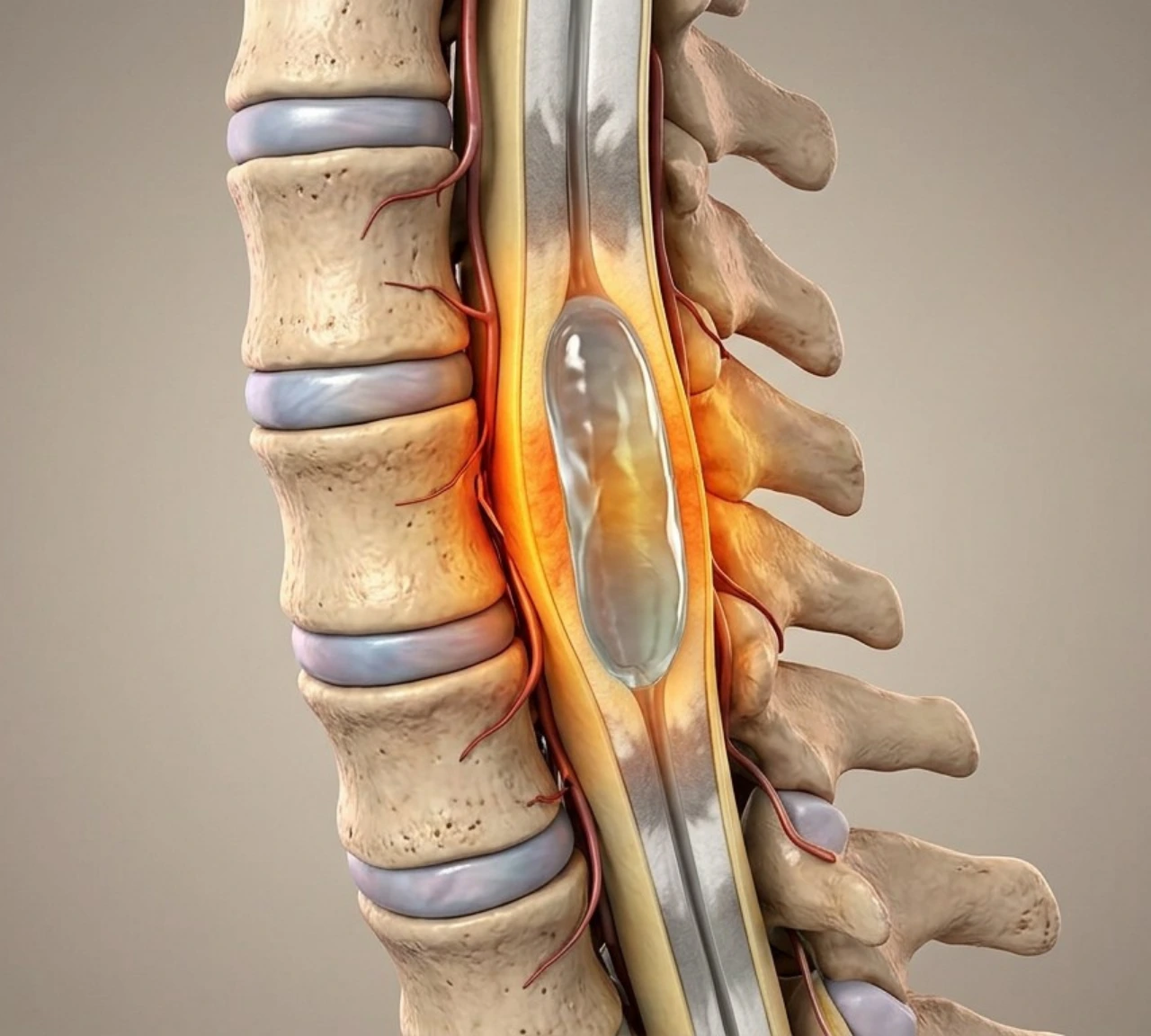
Syringomyelia symptoms
The symptoms come from damage at the center of the cord, and they develop gradually. These are the ones people notice first.

Loss of pain and temperature sensation in a cape pattern
Reduced sensitivity to pain and temperature across the shoulders, upper back, and arms, so burns and cuts can go unnoticed.

Normal touch loses pain sensation
Touch stays intact in the same area where pain and temperature sensation fade, a distinctive combination that points to the cord's center.

Weakness and wasting in the hands
A gradual loss of muscle bulk and grip strength in the hands, developing over months to years.

Stiffness in the legs, or a change in how you walk
New stiffness in the legs or a change in how you walk deserves prompt review, since it can mean the cavity is growing.
What causes a fluid-filled cavity in the spinal cord ?
A syrinx usually forms when the flow of spinal fluid is blocked at some point. Several causes are behind most cases.
Book an Appointment →-
01
Chiari malformation
The most common cause is when the lower brain goes too low and blocks normal fluid circulation.
-
02
A previous spinal cord injury
A cavity can form months or even years after an injury to the cord.
-
03
Scarring of the cord coverings
Scarring after meningitis, bleeding, or surgery can block the normal flow of fluid.
-
04
A tumor in or beside the cord
A growth within or next to the cord can obstruct fluid flow and cause a cavity to form.
-
05
Tethered cord or a recurrent cavity
A tethered cord or another developmental issue, along with cavities that persist or come back after previous treatment, requires a specialist's review.

How is syringomyelia diagnosed?
Your history and a neurological exam
We map exactly where sensation, strength, and reflexes have changed, which often points to the level of the cavity.
MRI of the spine and skull base
The medical team performs an MRI of the entire spine and the base of the skull to find the cause of the blockage. They also plan to repeat the imaging to see if the cavity is changing, not just at set intervals.
Two specialties, one case
A neurosurgeon and an orthopaedic spine surgeon review the case together, because the cause and the cavity may lie in different places.
A clear plan you can follow
You leave knowing whether the plan is to monitor, treat the cause, or perform surgery, and the reasoning behind it.
Syringomyelia treatment, from conservative care to surgery
A stable syrinx with no symptoms is often monitored. When surgery is needed, it targets the blockage causing the fluid problem, not the cavity itself.
Monitoring and non-surgical care
For a stable cavity that is not causing progressive symptoms
- Scheduled MRI monitoring when the cavity is small, stable, and not causing symptoms.
- Physical and occupational therapy for hand function, stiffness, balance, and walking.
- Protective strategies for hands and skin when pain and heat sensation are reduced.
- Pain management for neck, back, shoulder, or arm pain.
Surgery, when needed
Treatment aimed at the cause
- Base of skull decompression when Arnold-Chiari malformation blocks fluid circulation.
- Release of scarring or tethering that restricts spinal fluid flow.
- Removal of a tumor that obstructs the cord or nearby fluid pathways.
- Syrinx shunting in selected cases, or revision surgery when a cavity returns.

When it cannot wait: rapidly worsening weakness in the arms or legs, new difficulty swallowing or breathing, a sudden change in walking, or new loss of bowel or bladder control. Call 911 or go to the nearest emergency department right away.
Doctors who treat Syringomyelia (Syrinx) in New York
Our syrinx doctors bring neurosurgeons and orthopaedic spine surgeons together across the New York metro area to review each case.