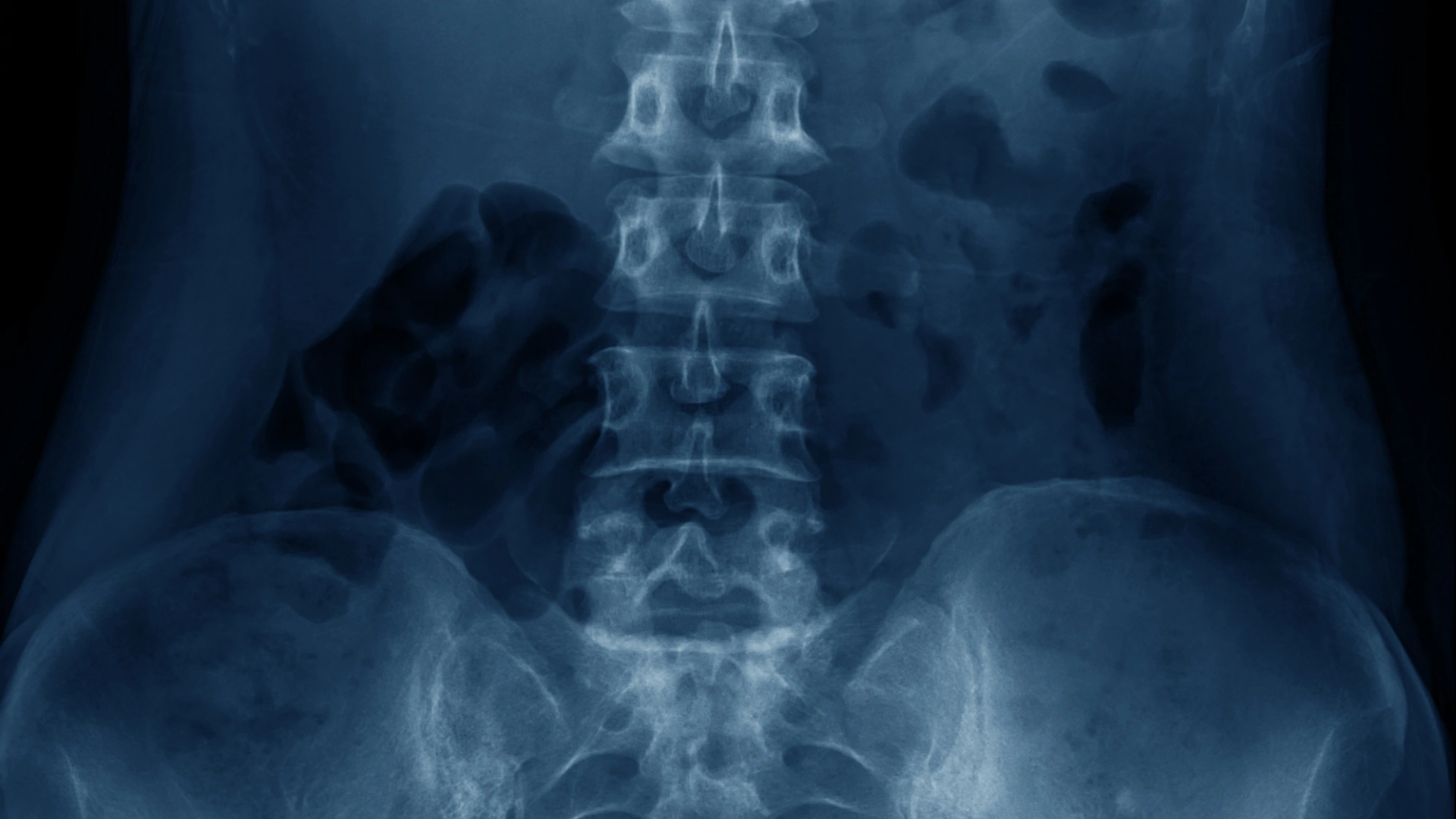
Lumbar Spine Surgery in New York
Our New York team reviews your lumbar spine case, focusing on the safest and most minimally invasive methods for effective results.
What is lumbar spine surgery?
Lumbar spine surgery is not a single operation for one issue. It comprises various procedures aimed at removing specific obstacles. The five lumbar vertebrae support much of your body weight, so surgery can relieve nerve pressure, reopen a narrowed canal, or stabilize an unstable segment.
A smaller procedure isn’t always the right choice. It needs to address the structure causing your symptoms and perform the necessary work safely. Aligning the operation with your examination and imaging enhances the outcomes of lumbar spine surgery.
See how we approach it
Who is lumbar surgery for?
Most lower back issues resolve without surgery. However, these four findings alter the approach.

Leg pain that persists despite treatment
Pain, numbness, or weakness follows a clear line down one leg and has not improved with proper conservative care.

Your walking distance is shrinking
Leg heaviness or cramping starts after walking and eases when you sit or lean forward.

Weakness you can notice
Leg heaviness or cramping starts after walking and eases when you sit or lean forward.

Exam and imaging agree
The examination and imaging identify the same structural problem, making the likely effect of lumbar spine surgery clearer.
How lumbar spine surgery is performed ?
The procedure addresses the structural problem. Lumbar spine surgery can remove a disc fragment, create more space for nerves, or stabilize abnormal movement.
Microdiscectomy
Surgically excising the part of a herniated disc that compresses a nerve root is the most common lumbar procedure.
 01
Laminectomy and decompression
A laminectomy reopens a spinal canal narrowed by crowding; it is the workhorse of lumbar decompression.
02
Foraminotomy
Widening the opening through which a nerve root exits the spine.
03
Fusion
Fusion stabilizes a level that has either slipped or is unstable.
04
Revision surgery
A previous lumbar operation may require extension, correction, or reconstruction if symptoms or instability continue.
05

How we determine whether lumbar spine surgery is right for you
Your history and examination
We listen first, then test strength, sensation, reflexes, walking, and the movements that reproduce your back or leg symptoms.
Imaging read alongside the exam
A scan is not a reason to operate. Many adults have lumbar MRI findings that cause no symptoms. We treat the examination as the deciding evidence and will tell you when the imaging does not explain your pain.
Two specialties, one plan
Neurosurgeons and orthopaedic spine surgeons review your examination and imaging together, combining nerve, alignment, stability, and reconstruction perspectives.
The recommendation explained clearly
We explain the alternatives, recovery, and why a focused procedure, larger reconstruction, or no operation may be appropriate.
What we try before lumbar spine surgery surgery
Most lower back problems settle without an operation. Surgery is considered only when persistent symptoms or weakness, supported by imaging, point to a treatable cause.
Care while the problem settles
Movement and symptom control come first.
- Physical therapy focused on the muscles that steady the lower back
- Activity changes that reduce strain without stopping movement
- Medication to reduce inflammation or relieve symptoms caused by an irritated nerve
- Epidural injections used to treat symptoms and test the suspected level
Surgery for a confirmed target
Minimally invasive where anatomy allows.
- Discectomy or microdiscectomy for disc material pressing on a nerve root
- Laminectomy and spinal decompression surgery when the canal is narrowed
- Foraminotomy when one nerve opening needs more room
- Fusion when instability is a central part of the problem

When to call us after surgery: fever, redness, or drainage from the incision. Clear fluid leaking from the wound. A severe headache when you sit or stand. New leg weakness, numbness in the inner thighs or groin, or loss of bowel or bladder control. For the last three, call 911 or go to the nearest emergency department right away.