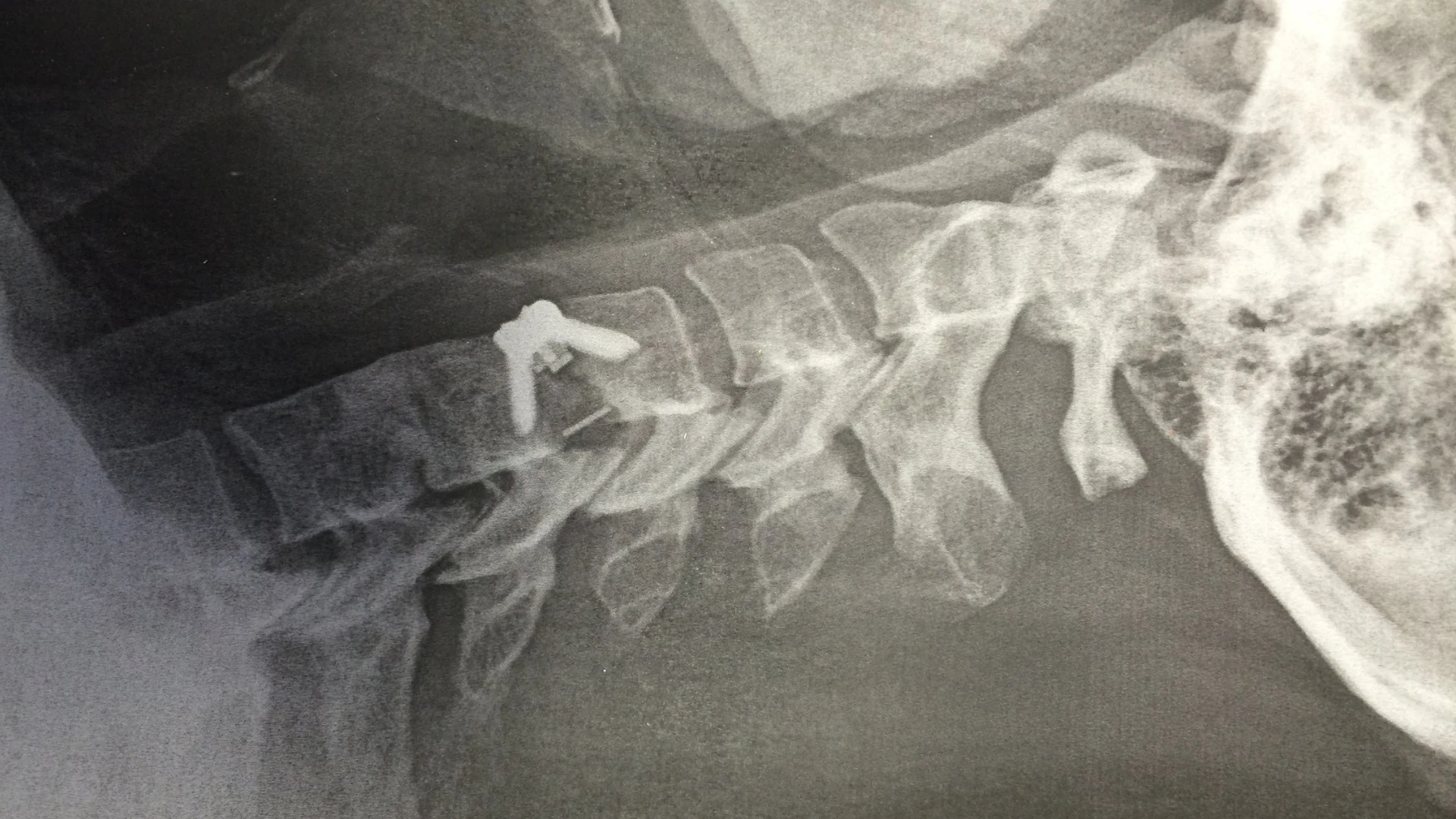
Spinal Fusion Surgery in New York
Our New York team offers spinal fusion surgery, carefully planning each case and fusing levels only when movement leads to complications.
What is spinal fusion ?
Spinal fusion does not restore a level to its original state. Instead, it is a deliberate trade-off: sacrificing movement at one level to relieve pain caused by abnormal movement. Two vertebrae are fused so that bone can grow between them and create one segment.
The operation is complete when the surgeon finishes, but the fusion itself takes months to develop. A clear reason to limit movement, prepared bone, suitable graft material, and stability during healing make it work.
See how we approach it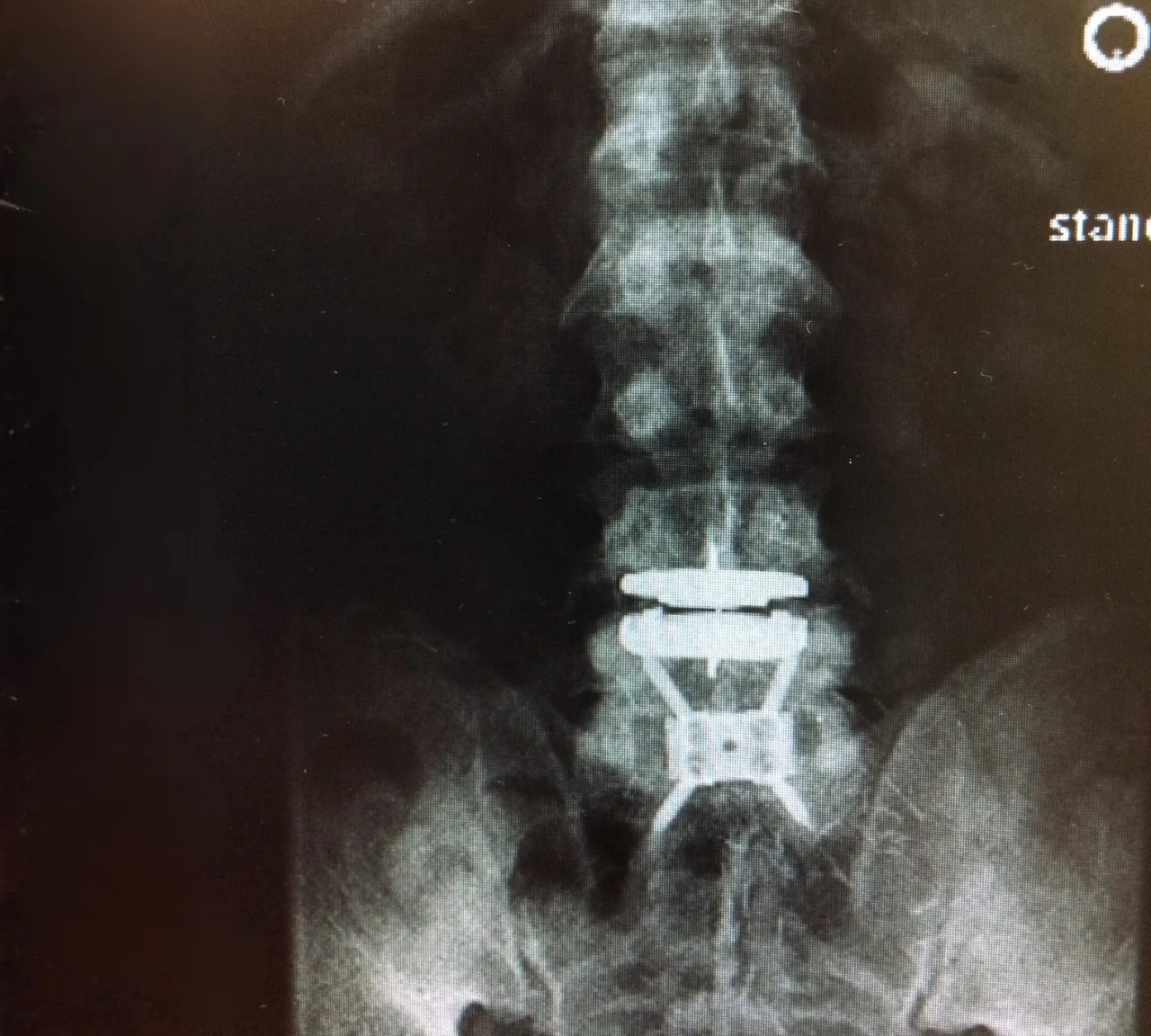
Who is spinal fusion surgery for?
Fusion aims to address instability and deformity, not just pain. The following four are the main indications.

A level that moves when it should not
Standing and bending images confirm instability or a slip, providing the clearest reason to fuse.
A deformity needing correction
A curve or loss of alignment requires stabilization so the corrected position can hold during healing.

Decompression that leaves instability
Reopening the space requires removing enough bone that the segment needs support once the pressure is relieved.
A level beside a previous fusion has broken down
New pain or weakness near a previous fusion should be evaluated quickly if there are changes in function.
How spinal fusion surgery is performed ?
The operation includes diagnosis, decompression if necessary, bone grafting, and internal support as the vertebrae fuse.
Confirm abnormal movement
Standing and bending imaging can show instability that a scan taken while lying down might miss.
 01
Relieve pressure
The surgeon removes the disc or bone that is pressing on the nerves. This is often the main focus of the operation.
02
Place the graft
A graft or spacer forms the bridge that allows new bone to grow.
03
Hold the position
Screws and rods help keep the level steady while the bone grows. They are not the fusion.
04
Revision and reconstruction
Revision may expand or rebuild previous work when nearby levels or alignment have shifted.
05

How we determine whether spinal fusion surgery is right for you
Your symptoms and examination
We ask which movements worsen symptoms. Then, we examine strength, sensation, reflexes, balance, and walking.
Wear does not prove instability
Most adults experience spinal wear as they age. Fusion is only considered when imaging shows instability or deformity that aligns with your symptoms.
Two specialties review your case
Neurosurgeons and orthopaedic spine surgeons examine the same findings. They agree on whether it is justified to remove movement from that level.
Every option is explained
We compare fusion to decompression alone, ongoing treatment, and suitable motion-preserving alternatives.
What we try before spinal fusion surgery surgery
Most back pain does not require fusion. A worn spinal level is usually not a reason for fusion. Fusion is generally considered only when there is instability or deformity.
What we confirm first
Evidence before an operation.
- A full assessment of whether movement at that level is genuinely causing the pain
- Standing and bending imaging to demonstrate instability rather than wear alone
- Conservative care completed properly when symptoms and nerve function allow time
- Decompression alone when the level is stable, and fusion would add nothing useful
Spinal fusion surgery, when needed
The smallest operation that can hold the required correction.
- Interbody lumbar fusion using a graft or spacer between the vertebrae
- Posterior fusion using screws and rods to hold position while bone grows
- Minimally invasive spinal fusion through tubular or navigated approaches when anatomy allows
- Evaluation for a motion-preserving alternative such as disc replacement (when appropriate)

When to call us after surgery: fever or drainage from the incision, a sudden increase in pain, new weakness in a limb, calf pain or swelling, shortness of breath, or loss of bowel or bladder control. Call 911 or go to the nearest emergency department right away if you have trouble breathing, new weakness, or changes in your bowel or bladder.