
Arnold-Chiari Malformation Treatment in New York
Our New York Arnold Chiari Malformation specialists review your case together and recommend surgery only when the crowding is truly causing your symptoms.
What is Chiari malformation ?
Chiari malformation is a problem of space, not a growth or a disease. The lower part of the cerebellum, at the back of the brain, drops below the opening at the base of the skull and crowds it. We see it in children and adults across New York, often found on a scan done for something else.
That crowding leaves less room for the spinal fluid that normally flows between the brain and spine. Coughing, straining, or laughing briefly raises the pressure with nowhere to go, which is what brings on the headache. Matching the scan to your symptoms points to the right care.
See how it is treated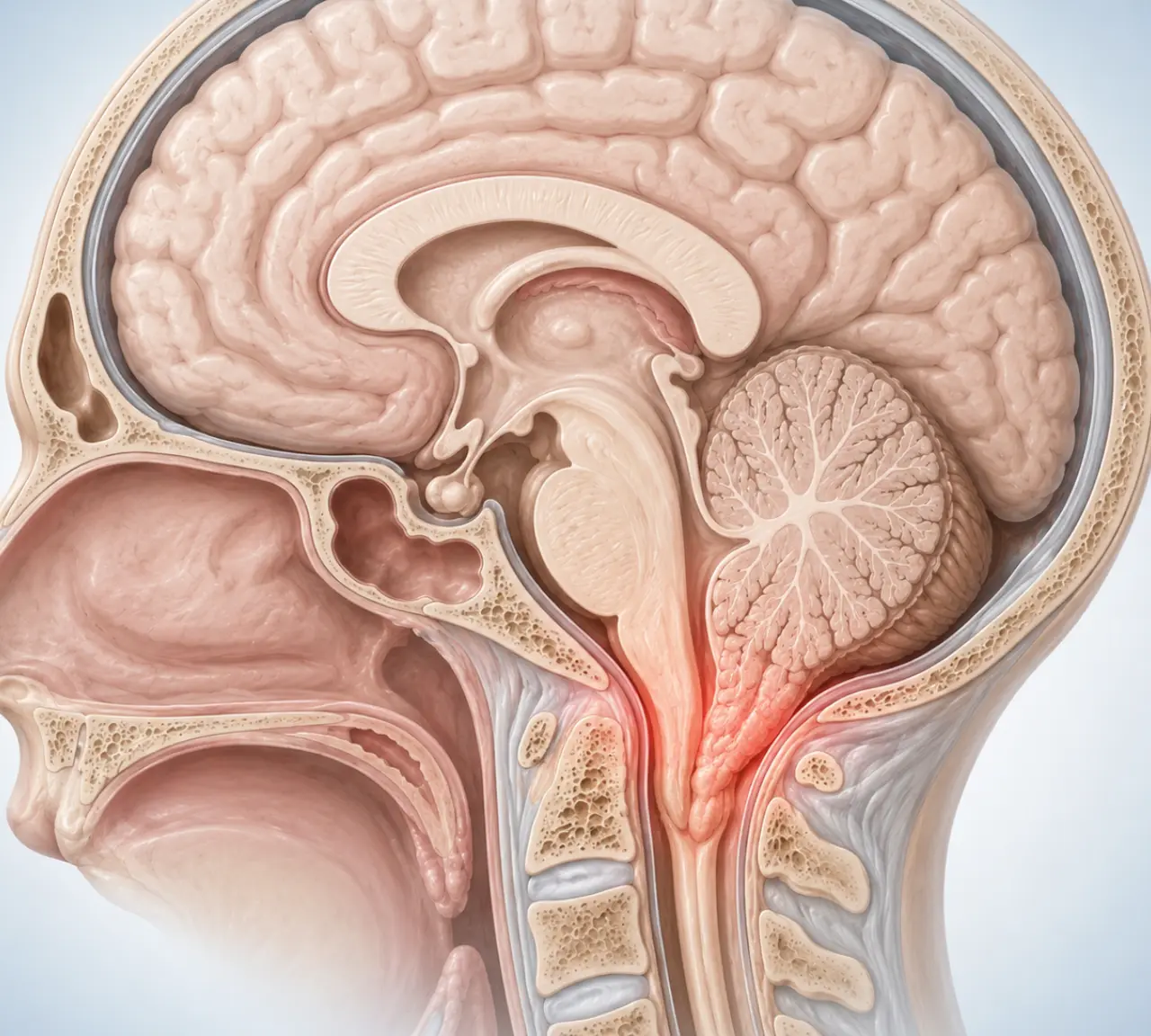
Chiari malformation symptoms
Many people, children included, have no symptoms at all. When symptoms do appear, these are the ones that show up the most.

A headache brought on by coughing or straining
The most telling sign: a headache at the back of the head that flares when you cough, strain, or laugh.

Neck pain and pressure at the base of the skull
A deep ache in the neck and pressure where the skull meets the spine, sometimes spreading into the shoulders.

Dizziness, ringing in the ears, or trouble swallowing
Unsteadiness, dizziness, ringing in the ears, or difficulty swallowing needs prompt assessment, especially when it is new or getting worse.

Numbness or weakness across the shoulders and hands
Numbness, weakness, or reduced pain and temperature sensation across the shoulders and hands.
What causes the lower part of the brain to sit too low ?
Chiari malformation usually reflects skull base development, though similar MRI findings can have other causes. We review your case thoroughly to determine whether it explains symptoms or another diagnosis.
Book an Appointment →-
01
Limited skull base space
A smaller space around the lower brain can push cerebellar tissue below the skull opening.
-
02
It can run in families
Chiari sometimes appears in more than one family member, suggesting that inherited developmental factors may contribute.
-
03
Bone and connective tissue conditions
Disorders that affect bone or connective tissue can alter the skull base and draw the brain lower.
-
04
Spinal fluid pressure that is too high or too low
Raised or lowered fluid pressure can mimic Chiari on a scan and requires different treatment.
-
05
Symptoms after previous decompression
When symptoms persist or return after earlier decompression surgery, the case needs dedicated revision review, which we handle here.

How is Chiari malformation diagnosed?
History, including childhood milestones
We review headaches, swallowing, sleep, balance, sensation, and strength. For children, we also discuss development, feeding, and school changes with caregivers.
An MRI and a fluid-flow study
Crowding seen on an MRI is not, by itself, a reason to operate. We assess fluid flow and carefully match imaging findings to your symptoms before recommending surgery, and we will tell you when the scan and the clinical picture do not align.
Both specialties on one case
A neurosurgeon and an orthopaedic spine surgeon look at the case together, with paediatric expertise on hand when the patient is a child.
An honest recommendation
We explain the basis for monitoring, symptom care, more testing, or surgery, with function, safety, and quality of life in view.
Chiari malformation treatment, from conservative care to surgery
Many people need monitoring rather than surgery. Decompression is considered when symptoms, fluid blockage, or a syrinx show a specific reason to intervene.
Careful monitoring and symptom care
Care based on symptoms and imaging
- Scheduled MRI monitoring when the finding causes no symptoms.
- Evaluation for the conditions that mimic Chiari, including high and low spinal fluid pressure.
- Headache management to ease the classic cough-related pain.
- Physical therapy for suitable neck symptoms and balance problems.
Surgery, when it is the answer
Space restored around fluid pathways
- Posterior fossa decompression to enlarge the space at the base of the skull.
- Opening and patching the covering layer when the case calls for it.
- Treatment of an associated syrinx, the fluid cavity that can form in the cord.
- Revision decompression when symptoms persist or return after earlier surgery.

When it cannot wait: new trouble swallowing or breathing, a change in your voice, weakness in the arms or legs that is worsening quickly, fainting, or a sudden severe headache with vomiting. Call 911 or go to the nearest emergency department now.
Doctors who treat Arnold-Chiari Malformation in New York
Our Chiari malformation doctors are neurosurgeons and orthopaedic spine surgeons with paediatric and academic-level expertise, reviewing cases together in the New York metro area.