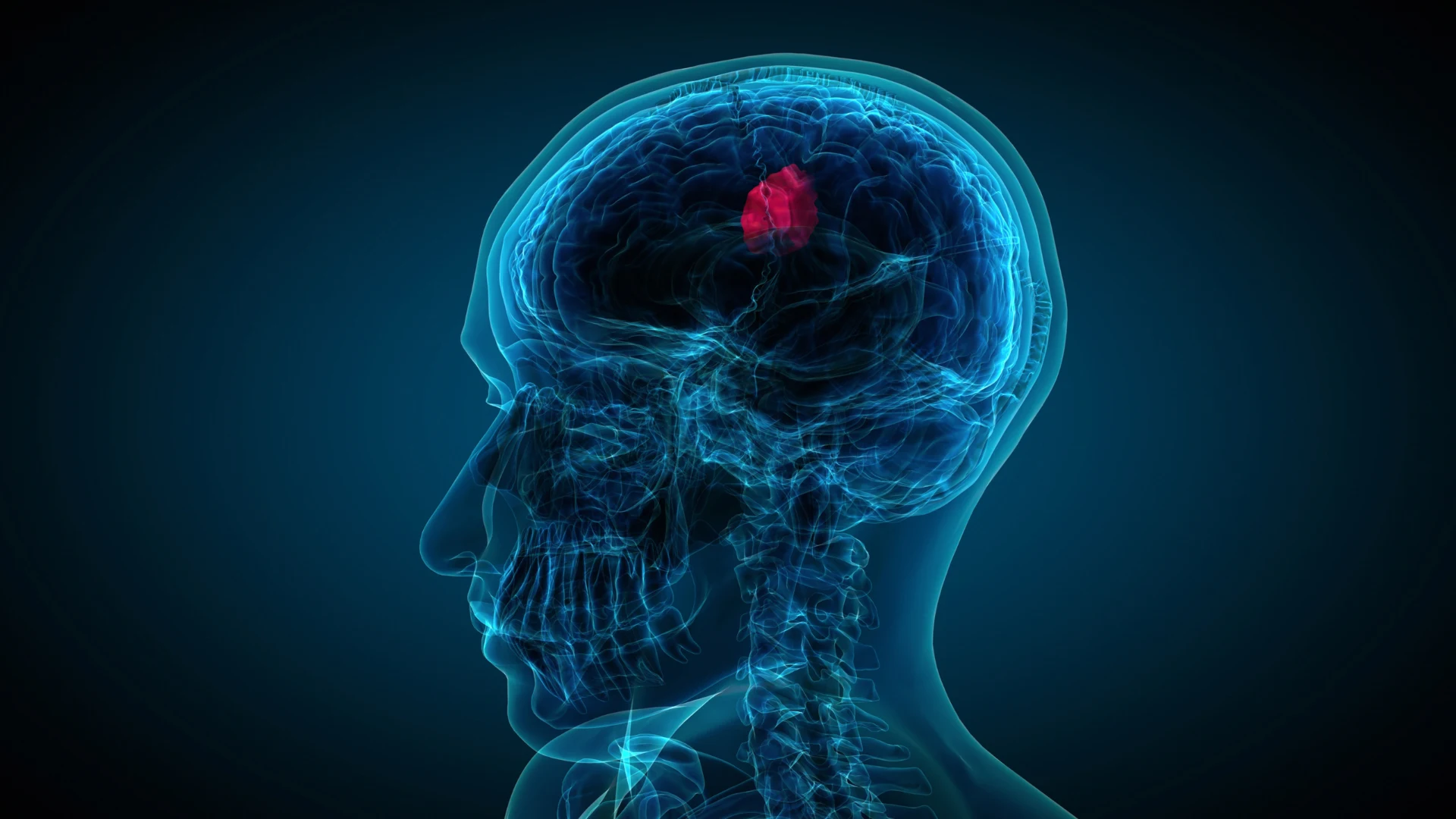
Colloid Cysts Treatment in New York
Our New York colloid cysts surgeons review your case as one team, starting with the least invasive care that can work.
What is a colloid cyst ?
A colloid cyst in the brain is benign and usually no bigger than a pea. However, it forms in a critical spot: the roof of the third ventricle. This area is where spinal fluid flows from the upper brain chambers to the lower ones.
A cyst in this location can block fluid, causing pressure to build inside the skull. This is why even a benign growth needs careful attention. A precise diagnosis is essential for effective treatment.
See how it is treated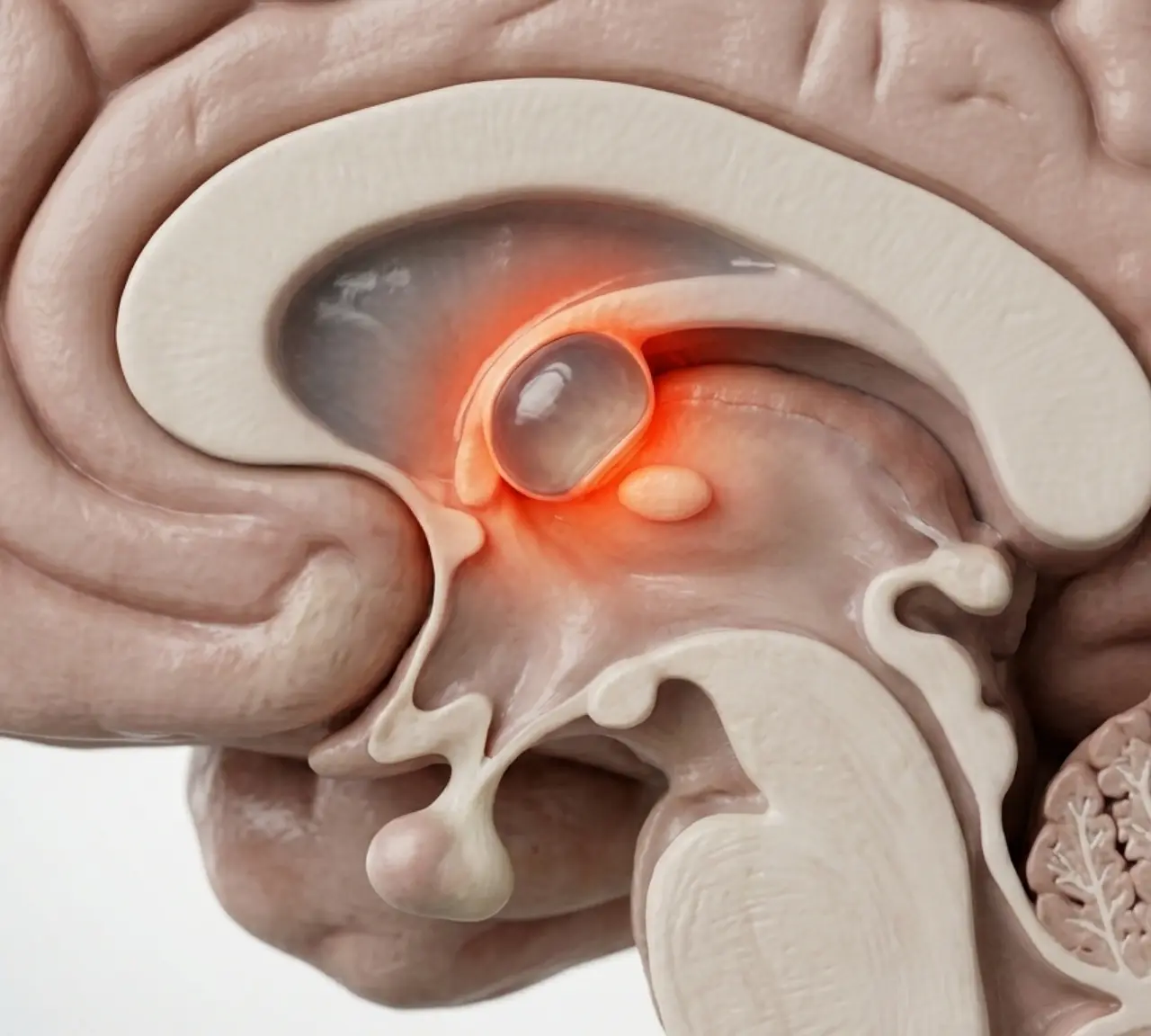
Colloid cyst symptoms
Most colloid cysts remain asymptomatic. When symptoms occur, they usually result from increased pressure within the skull. Below are some of the most common symptoms of colloid cysts.

Often nothing at all
Colloid cysts are frequently found by chance on scans done for unrelated reasons and cause no symptoms of their own.

Headache that comes and goes depending on position
A headache arrives and eases quickly, sometimes relieved by lying down or by a change of posture.

Headache with nausea, blurred or double vision
Headache with nausea, blurred vision, or double vision can point to escalating fluid pressure.

Sudden severe headache with drowsiness
This one pattern is the signal to act straight away rather than wait it out, because it may indicate a sudden blockage.
What causes a fluid-filled cyst in the middle of the brain ?
A colloid cyst is a condition you are born with, rather than one that develops due to external factors. Here are a few key points to consider.
Book an Appointment →-
01
A remnant present from before birth
A developmental remnant left from before birth is the origin of essentially every colloid cyst.
-
02
No known lifestyle or environmental cause
There is no known lifestyle or environmental cause, which is worth stating plainly.
-
03
Slow enlargement in some people
In some people, the cyst enlarges gradually over years, while in others it stays the same size.
-
04
Its location in the third ventricle
Its position on the roof of the third ventricle is what determines whether it matters at all.
-
05
Residual or recurrent cyst
A cyst that remains or returns after earlier surgery or drainage needs dedicated review.

How is colloid cyst diagnosed?
Your history and a focused neurological exam
We ask how the headaches behave and check vision, balance, memory, and coordination for any sign of raised pressure.
Imaging that answers a specific question
MRI shows the cyst in detail, and CT can confirm it quickly in an urgent setting. Scheduled imaging helps us see if the cyst is getting bigger or blocking something. We also specify when a small, stable cyst just needs monitoring instead of treatment.
Two specialties reviewing one case
A neurosurgeon and an orthopaedic spine surgeon review the case together, so the recommendation reflects both perspectives.
Your options explained
Colloid cyst specialists explain monitoring, urgent symptoms, headache care, hydrocephalus risk, and whether surgery belongs in the plan.
Colloid cyst treatment, from conservative care to surgery
Colloid cyst treatment often involves monitoring, but surgeons recommend surgery when size, growth, symptoms, or fluid blockage change the risk.
Monitoring and non-surgical care
Small stable cysts may be monitored
- Scheduled MRI monitoring when the cyst is small, stable, and not obstructing.
- Assessment of fluid pressure when symptoms suggest blockage.
- Headache care while the pattern is being clarified.
- Contact plan for symptoms that prompt immediate review.
Surgery, when it is the answer
Colloid cyst brain removal is matched to the anatomy and the blockage
- Endoscopic removal through a small opening is often the preferred route.
- Microsurgical removal through a craniotomy when required by the anatomy.
- Treatment of any associated hydrocephalus, sometimes requiring a shunt.
- Repeat surgery for a residual or recurrent cyst.

When it cannot wait: a sudden severe headache with vomiting, rapidly increasing drowsiness, double vision, or a sudden change in alertness. Call 911 or go to the nearest emergency department straight away.
Doctors who treat Colloid Cysts in New York
Our colloid cyst specialist team includes neurosurgeons and orthopaedic spine surgeons with advanced training who review each case together across the New York metro area.