
Craniopharyngioma Treatment in New York
Our New York craniopharyngioma doctors review your case together, planning surgery, radiation, and hormone care around a crowded, delicate area of the brain.
What is craniopharyngioma ?
A craniopharyngioma is a benign tumor, but it poses significant challenges because of its location, not its behavior. It comes from leftover cells that were involved in the early development of the pituitary gland.
This tumor grows in a tight space at the base of the skull. It is near the optic nerves, pituitary stalk, and the brain area that controls appetite, thirst, and sleep. Even a small tumor can affect vision, hormone levels, and daily rhythms. This shows how important an accurate diagnosis is for making treatment effective.
See how it is treated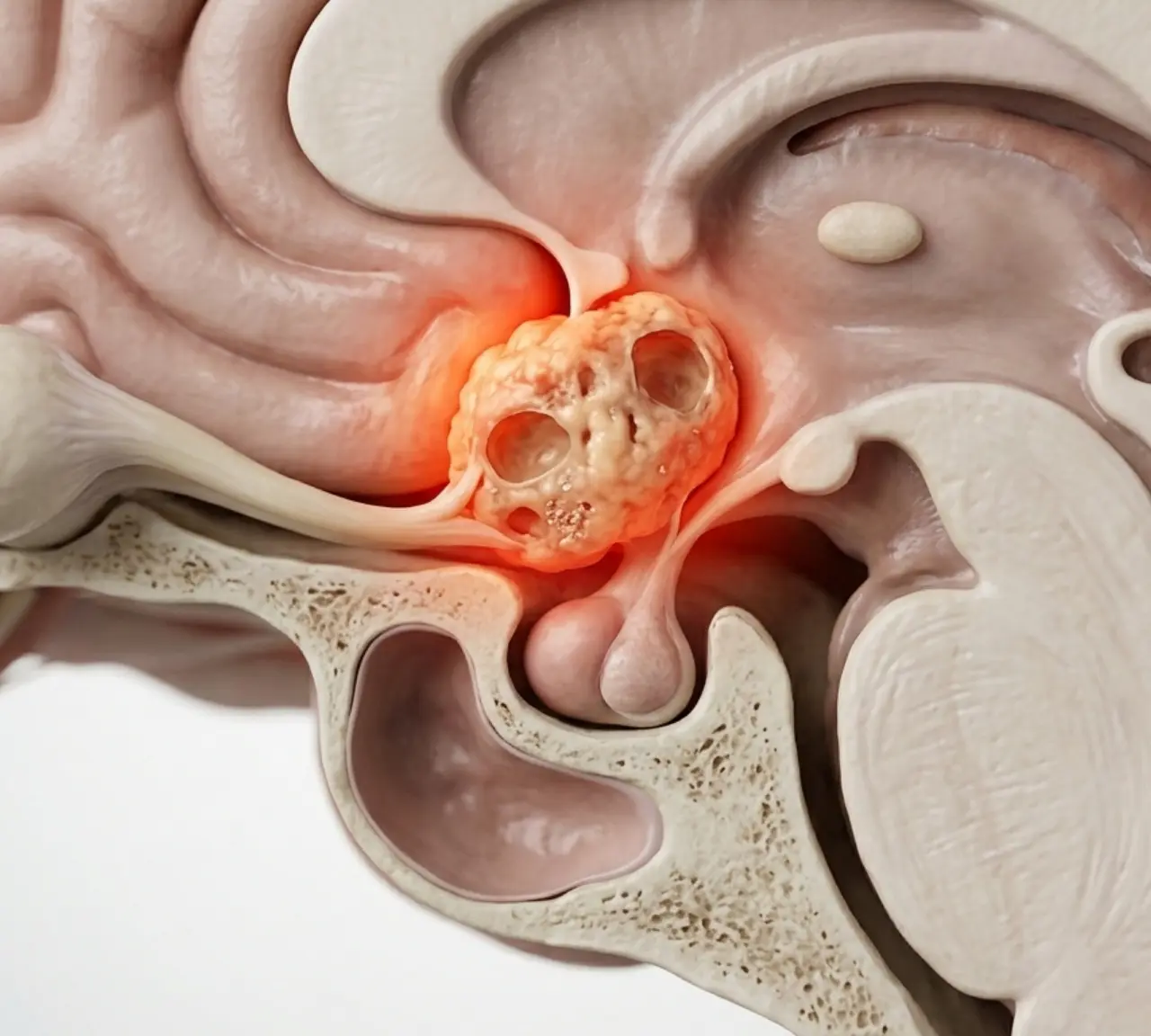
Craniopharyngioma symptoms
Due to its growth location, the symptoms often focus on vision, hormones, and pressure. In children, these symptoms may be subtle.

Loss of peripheral vision
Symptoms often develop gradually; doctors sometimes find childhood craniopharyngioma first during a routine eye test instead of after families notice symptoms at home.

Hormone changes
Slowed growth in children, fatigue, feeling cold, loss of periods, or excessive thirst and frequent urination.

Headache with nausea
A pressure headache rather than a throbbing one, often with nausea, can occur as fluid or the tumor raises pressure.

Weight, sleep, or temperature changes
If you notice new weight gain, sleep issues, or trouble with temperature control, it's important to mention these. They relate to the appetite-and-rhythm center.
What causes a benign growth above the pituitary gland ?
A craniopharyngioma comes from cells left over from early development. There is no known way to prevent it.
Book an Appointment →-
01
Leftover cells from early development
Nearly always, it develops from cells left behind as the pituitary gland formed before birth.
-
02
Two age peaks
It appears most often in childhood and again later in adulthood, less often in between.
-
03
No known risk factors
There is no known environmental or inherited cause, which is important to emphasize clearly.
-
04
Cyst enlargement
Many contain a fluid-filled cyst that can enlarge and lead to a sudden worsening of symptoms.
-
05
Regrowth after earlier treatment
It often regrows after surgery or radiation, which is why we assess recurrence separately.

How is craniopharyngioma diagnosed?
History and a check of vision and hormone function
We ask about vision, energy, growth, thirst, and periods, then examine and arrange the right tests.
MRI and CT, with vision and hormone status assessed first
MRI shows the tumor, while CT shows if it has calcification. Hormone status is checked, and a formal visual field test is done before planning surgery.
Both specialties on the same case, with pediatrics
A neurosurgeon and an orthopaedic spine surgeon review the case together. They also consult with endocrinology, ophthalmology, and pediatrics when needed.
Your plan explained
Our craniopharyngioma doctors explain whether monitoring, radiation, drainage, surgery, or endocrinology follow-up comes next and why.
Craniopharyngioma treatment, from conservative care to surgery
Craniopharyngioma treatment uses a team approach. This includes surgery, radiation, cyst care, hormone therapy, or monitoring based on vision and hormone function.
Care alongside surgery
Usually lifelong, and planned from the start
- Long-term hormone replacement with endocrinology follow-up after tumor or treatment.
- Radiation or radiosurgery planned with oncology for residual or recurrent tumor.
- Drainage of an enlarging cyst when fluid drives pressure or vision change.
- Ophthalmologic monitoring of vision and endocrinology-led follow-up.
Surgery, the main treatment
Craniopharyngioma removal depends on what can be taken safely
- Endoscopic endonasal removal for selected tumors above the gland.
- Craniotomy when the tumor extends beyond its reach route.
- Cyst drainage with reservoir placement in selected cases.
- Repeat surgery or radiation for regrowth after prior treatment.

When it cannot wait: sudden loss of vision, a sudden severe headache with vomiting and drowsiness, extreme thirst with confusion or drowsiness, or a rapid change in alertness. Call 911 or go to the nearest emergency department now.
Doctors who treat Craniopharyngioma in New York
Our craniopharyngioma team includes neurosurgeons and spine surgeons, including pediatric specialists, who review cases in the New York metro area.