Spinal Cyst Treatment in New York
Our New York spinal cyst surgeons review your case as one team, starting with the least invasive care that can explain and relieve symptoms.
What is a spinal cyst ?
A spinal cyst is a fluid-filled sac, not a tumor. Many spinal cysts cause no symptoms and are found during imaging for other reasons. When fluid accumulates near a worn joint or along a nerve root, it can compress the space a nerve occupies.
This page focuses on cysts located outside the cord. Spinal tumors are solid growths, while syringomyelia involves fluid within the cord itself. Accurate diagnosis determines if the cyst aligns with your symptoms, which is crucial for effective treatment.
See how it is treated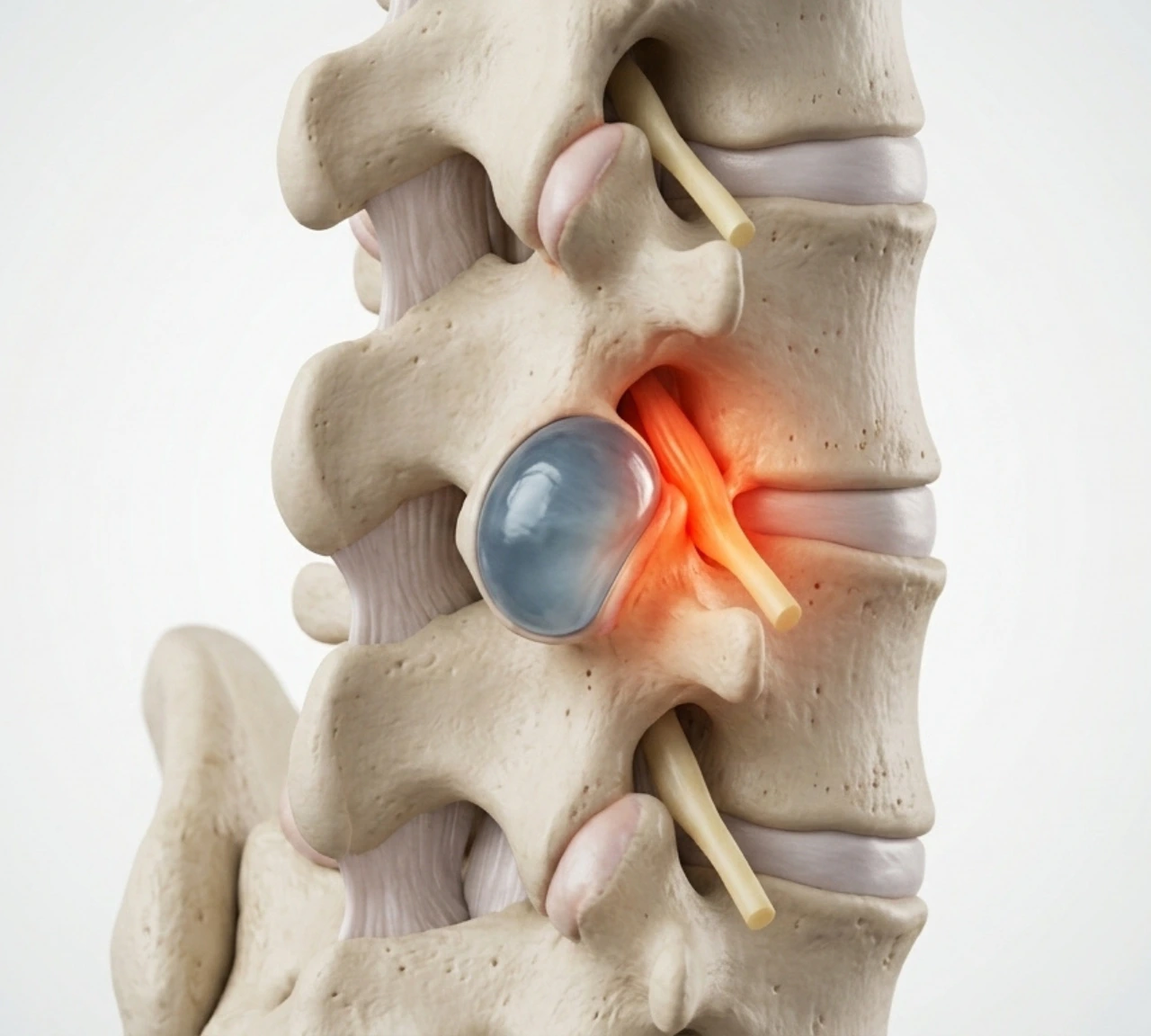
Spinal cysts symptoms
Many spinal cysts cause no symptoms at all. When one presses on a nerve, symptoms follow that nerve's path and are often noticed first.

Often nothing at all
Many are found by chance on a scan done for another reason and never cause any symptoms.

Leg or arm pain along one nerve route
Pain running along a single nerve, like that caused by a disc pressing on the same nerve.

Pain and heaviness with walking
When the spinal canal narrows, standing and walking bring on pain and heaviness that ease when you are seated or leaning forward.

Numbness or weakness in one area
New numbness or weakness in one part of a limb deserves prompt review, since it can mean the nerve is under pressure.
What causes a fluid-filled sac in the spine ?
Most of these sacs come from ordinary wear in the spine. A few types have specific causes.
Book an Appointment →-
01
Wear in a facet joint
As a facet joint wears, it can produce a synovial cyst, which is the most common type of spinal cyst to cause symptoms.
-
02
A pouch along a nerve root sleeve
Fluid can collect in a pouch on a nerve root sleeve, forming a Tarlov or perineural cyst.
-
03
Instability at a spinal level
When a level of the spine moves more than it should, the extra strain can increase fluid production in the joint.
-
04
Developmental cysts
Some cysts, including arachnoid cysts within the coverings, have been present since early life.
-
05
Sacs after earlier surgery or injection
A sac can form after previous spine surgery or an injection, and requires specialist evaluation.

How is a spinal cyst diagnosed?
Your history and a neurological exam
We check where your pain, numbness, and weakness occur, which nerve they follow, and how your position affects them.
MRI, matched to your symptoms
MRI reveals the cyst's size and the affected nerve or canal. We only treat a cyst if it correlates with your symptoms.
Reviewed by both specialists
A neurosurgeon and an orthopaedic spine surgeon review the case together and check whether the joint behind it is unstable.
A clear recommendation
You leave knowing whether the plan is observation, an injection, or surgery, and the reasoning behind the plan.
Spinal cysts treatment, from conservative care to surgery
Most spinal cysts need no operation. Treatment starts with symptom relief and monitoring, while surgery addresses nerve compression or joint instability.
Conservative care first
Care based on symptoms and scans
- Monitoring when the cyst does not cause symptoms.
- Physical therapy and activity changes for positional back or leg pain.
- Medication for nerve-related pain, numbness, tingling, or stiffness.
- Image-guided aspiration or injection in selected cases.
Surgery, when it is the answer
Surgery may be needed when a sac presses on a nerve and does not settle
- Removal of the cyst with decompression of the nerve or spinal canal.
- Fusion when instability drives the cyst and recurrence is likely.
- Minimally invasive decompression where anatomy and stability make it suitable.
- Revision surgery for spinal cysts that return after earlier treatment.

When it cannot wait: rapidly worsening weakness in a leg or arm, new numbness in the inner thighs or groin, or loss of bowel or bladder control. Call 911 or head to the nearest emergency department now.
Doctors who treat Spinal Cysts in New York
Our spinal cyst doctors, comprising neurosurgeons and orthopaedic spine surgeons, assess each case with advanced training across the New York metro area.