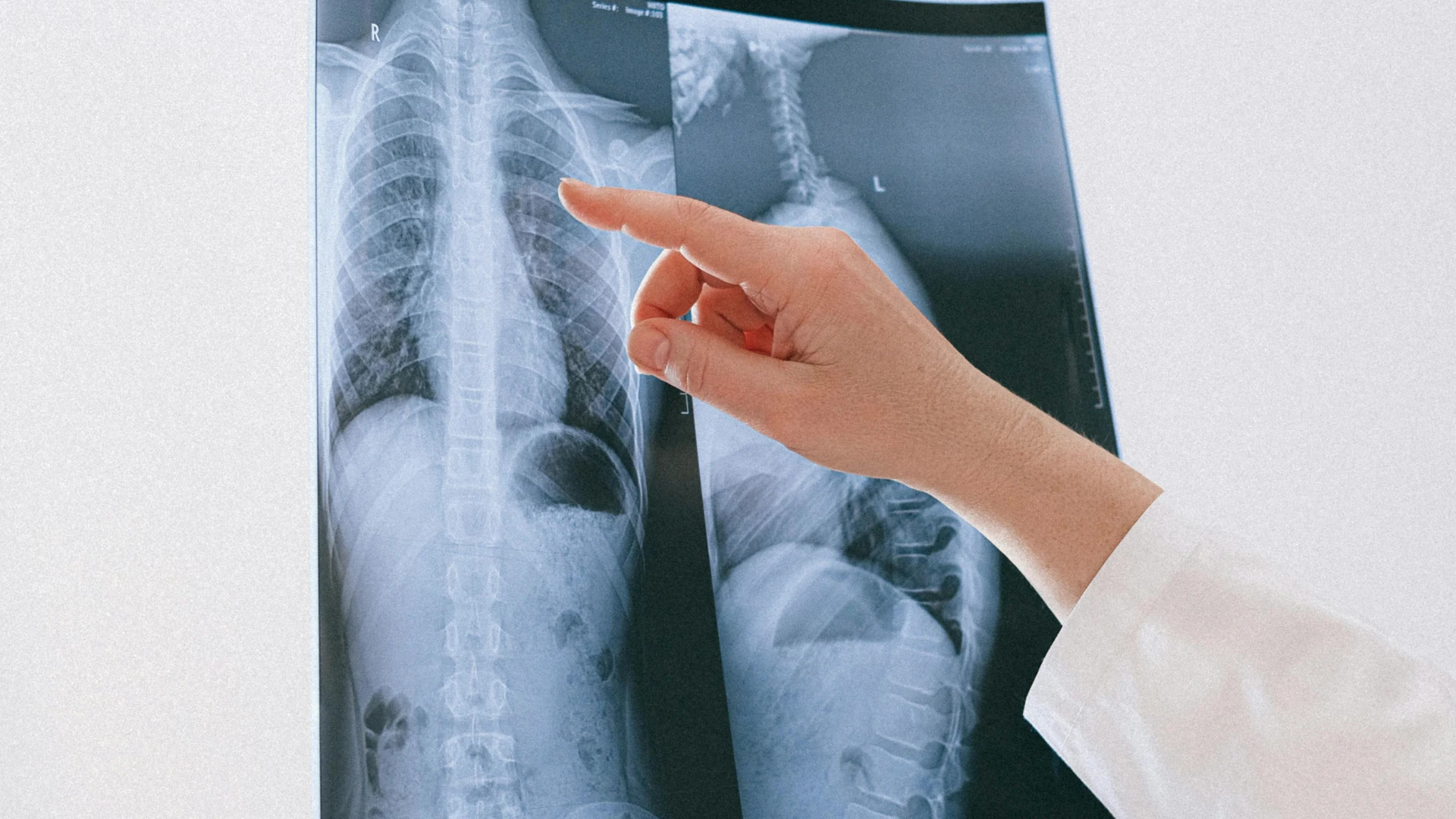
Thoracic Spine Surgery in New York
Our New York thoracic spine surgery team plans your case collaboratively, beginning with the safest, least invasive option.
What is thoracic spine surgery?
The middle back is the least mobile part of the spine and the most protected. That’s why surgery in this area is less common. Twelve thoracic vertebrae connect to the ribs, helping stabilize this segment. The canal is narrow, with the spinal cord running through it.
Therefore, the team chooses the approach carefully, whether from behind, from the side, or through the chest. This is important because there is little margin for error when operating near the spinal cord. In upper back surgery, the surgeon determines both the route and the diagnosis when scheduling the surgery.
See how we approach it
Who is thoracic surgery for?
Most middle back pain is muscular or postural. These four situations may require surgery.

Pain around the ribs
A band of discomfort that follows the path of a rib rather than traveling down a limb.

Signs that the spinal cord is involved
Leg weakness, a change in walking, or band-like tightness around the trunk. This deserves prompt evaluation.
A fracture that persists
Ongoing pain from a collapsed vertebra despite bracing and time.
A deformity that is progressing
A curve or rounding that is measurably changing or affecting your breathing.
How thoracic spine surgery is performed ?
The surgical approach depends on the diagnosis and the location or direction of compression. Thoracic spine surgery may decompress the cord, remove a disc, stabilize a fracture, or restore alignment.
Vertebral augmentation
Kyphoplasty or vertebroplasty may stabilize selected painful acute fractures.
 01
Posterior decompression
A thoracic laminectomy widens the spinal canal when it compresses the spinal cord.
02
Lateral and anterior approaches
A thoracic discectomy is performed from the side or through the chest when a posterior approach is unsafe.
03
Stabilization and fusion
A thoracic fusion is needed when a fracture, tumor, or infection has made the segment unstable.
04
Deformity correction and reconstruction
Complex reconstruction fixes alignment or corrects issues from past surgeries when simpler methods can't safely work.
05

How we determine whether thoracic spine surgery is right for you
Understand the pattern
We listen to you, then examine strength, reflexes, sensation, and gait, because spinal cord involvement often affects the legs first.
Confirm the source
Middle back pain can come from the heart, lungs, or abdomen. We review your general medical history before treating it as a surgical problem, and we will tell you if another cause needs to be ruled out first.
Two specialties review your case
Neurosurgeons and orthopaedic spine surgeons review the same examination and images, combining cord, alignment, stability, and reconstruction perspectives.
Discuss every reasonable option
We explain continued monitoring, conservative care, and surgical approaches so you understand why each option is or is not appropriate.
What we try before thoracic spine surgery surgery
Most middle back pain does not require surgery. When the spinal cord is compressed, treatment becomes more time-sensitive, because lost function is rarely fully restored.
Conservative care
Appropriate when the spinal cord is not compressed.
- Physical therapy to improve mobility and posture
- Bracing and supervised recovery for stable fractures
- Bone health and osteoporosis management to prevent future fractures
- Injections for identified sources of joint pain
Surgery for structural problems
Only as much access as needed to treat the cause.
- Vertebral augmentation for a painful recent fracture
- Thoracic decompression surgery for canal narrowing
- Lateral or anterior approaches to address a thoracic disc
- Stabilization and reconstruction for fracture, tumor, infection, or deformity

When to call us after surgery: shortness of breath or chest pain, fever or drainage from the incision, new weakness in the legs, a band of tightness around the trunk, or loss of bowel or bladder control. Call 911 or go to the nearest emergency department right away.