
Kyphosis Treatment in New York
Our New York kyphosis specialists review your case as one team, starting with the least invasive care and turning to surgery only when it is truly needed.
What is kyphosis ?
Kyphosis is a forward rounding of the upper spine. It is a different problem from scoliosis, which curves the spine sideways. A gentle forward curve in the upper back is normal and healthy. Kyphosis is when that curve becomes too pronounced. The first step is measuring how far it has gone.
As the front of the vertebrae loses height, the spine tips forward and the head drifts ahead of the body. The muscles of the upper back then hold a load they were not built to carry all day. Getting the measurement right is what makes treatment work.
See how it is treated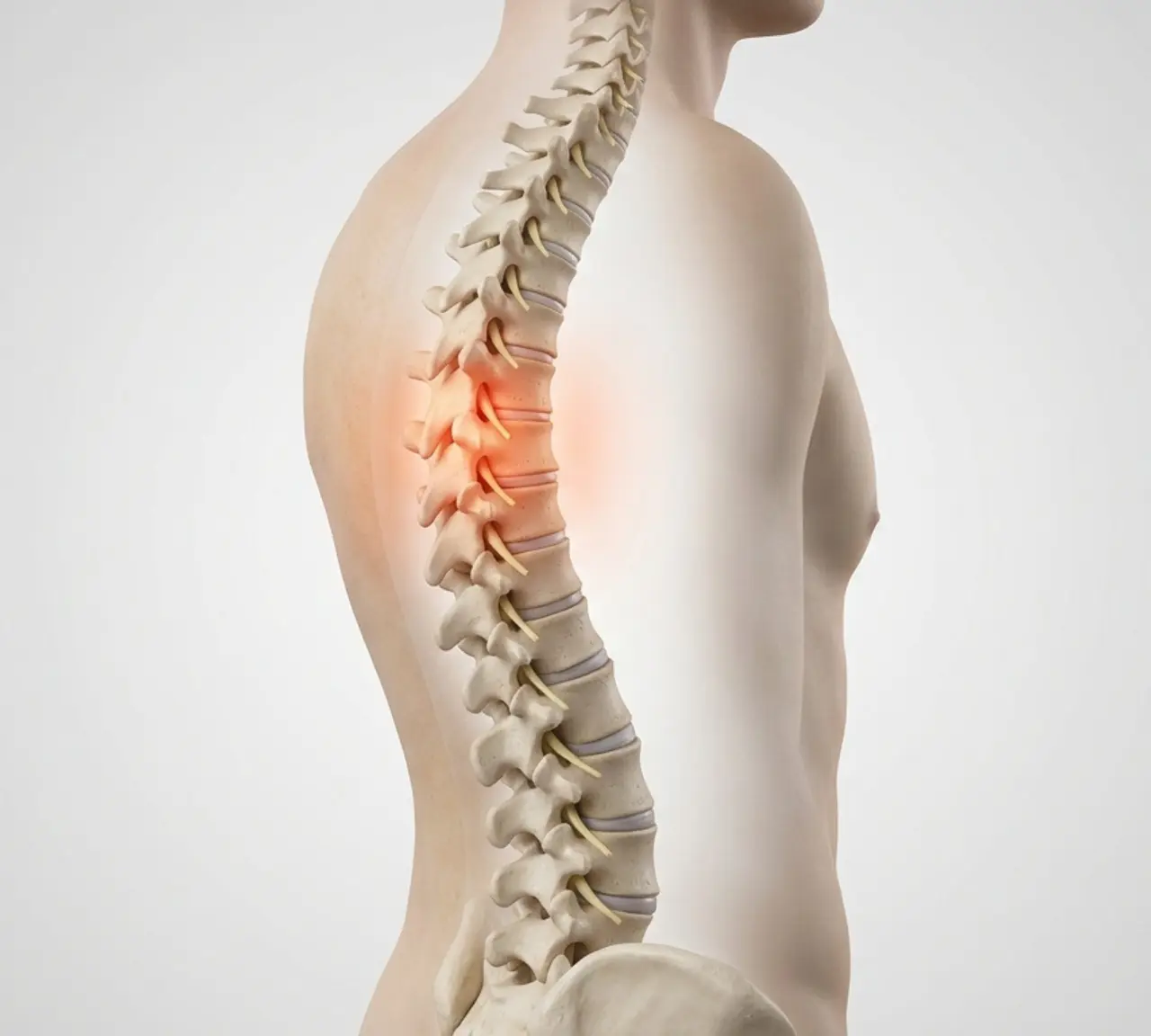
Kyphosis symptoms
Kyphosis usually shows up first as a change in shape, then as fatigue. A few patterns are worth watching for.

A visibly rounded upper back
A rounder upper back than before. Often it is family who notice the change first, especially in photographs.

Aching between the shoulder blades
A tired, muscular ache between the shoulder blades that builds through the day as the muscles hold you up.

A head held forward
Your head rests ahead of your shoulders. Looking straight ahead or holding a level gaze while walking takes effort.
Loss of height, or breathlessness with effort
Losing height, or growing breathless with activity, needs prompt evaluation. A severe curve can crowd the lungs.
What causes a rounded upper back ?
Kyphosis has several causes, and they call for very different care. The first job is to find which one is behind yours.
Book an Appointment →-
01
Fractures from thinning bone
Age-related and osteoporotic fractures that wedge the front of a vertebra. This is the most common cause in older adults.
-
02
Scheuermann's kyphosis
A growth-related wedging of the vertebrae that appears in the teenage years, leaving the curve rigid.
-
03
Postural kyphosis
A flexible, correctable curve that comes from posture, where the bones themselves are normal.
-
04
Disc collapse across several levels
Worn discs that lose height across several levels of the upper back, letting it round forward.
-
05
Kyphosis after previous spine surgery
A curve that develops above or below an earlier fusion, sometimes called junctional failure. This needs a dedicated revision review.

How is kyphosis diagnosed?
Your history and a hands-on exam
We ask when the rounding started and whether it is changing. Then we check your posture and bend you forward to see if the curve corrects or stays fixed.
Imaging that shows the real curve
Standing full-length alignment X-rays come before advanced imaging, because a scan taken lying down does not show the curve you actually live with.
Two specialties on one case
A neurosurgeon and an orthopaedic spine surgeon read your films together. One judges the overall balance, the other the bone and any level under strain.
A clear plan you can follow
You leave knowing the cause and your next step: therapy for a flexible curve, or bone treatment and a surgical review for a structural one.
Kyphosis treatment, from conservative care to surgery
Flexible, postural curves respond well to therapy. Curves from fracture or wedging do not straighten with exercise. The right plan depends on which type of curve you have.
Conservative care, for flexible and postural curves
The main approach for most curves
- Posture and back-extensor strengthening through physical therapy.
- Bone health assessment and osteoporosis treatment where it is needed.
- Bracing for selected growing patients whose curve is progressing.
- Pain management aimed at the muscles carrying the load.
Surgery, for structural or severe curves
Reserved for curves that will not correct
- Vertebral augmentation for a painful, fresh compression fracture.
- Instrumented correction and fusion for a structural curve.
- Osteotomy techniques for a rigid deformity.
- Revision correction for junctional failure after previous surgery.

When it cannot wait: a sudden increase in rounding, with severe new back pain, can indicate a fresh fracture. New weakness, numbness, or difficulty breathing is even more urgent. Call 911 or go to the nearest emergency department now for weakness or breathing changes.
Doctors who treat Kyphosis in New York
Your care is planned by neurosurgeons and orthopaedic spine surgeons with academic-level training, working together for patients across the New York metro area.
Joshua Adjei, MD

Murat Cosar, MD

Marc Dyrszka, MD

John A. Grant, MD

Simon Morr, MD
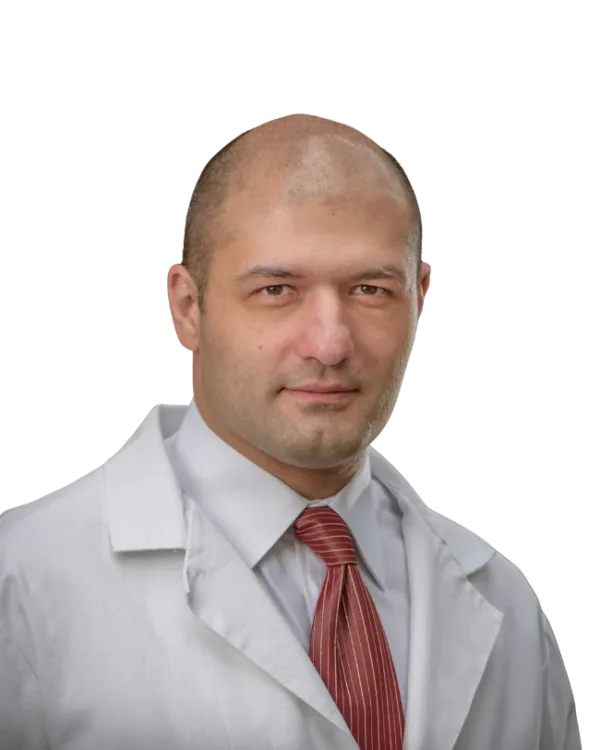
John F. Morrison, MD

Debra Petrucci, MD

Nicholas Post, MD

Jay Reidler, MD

Yigal Samocha, MD