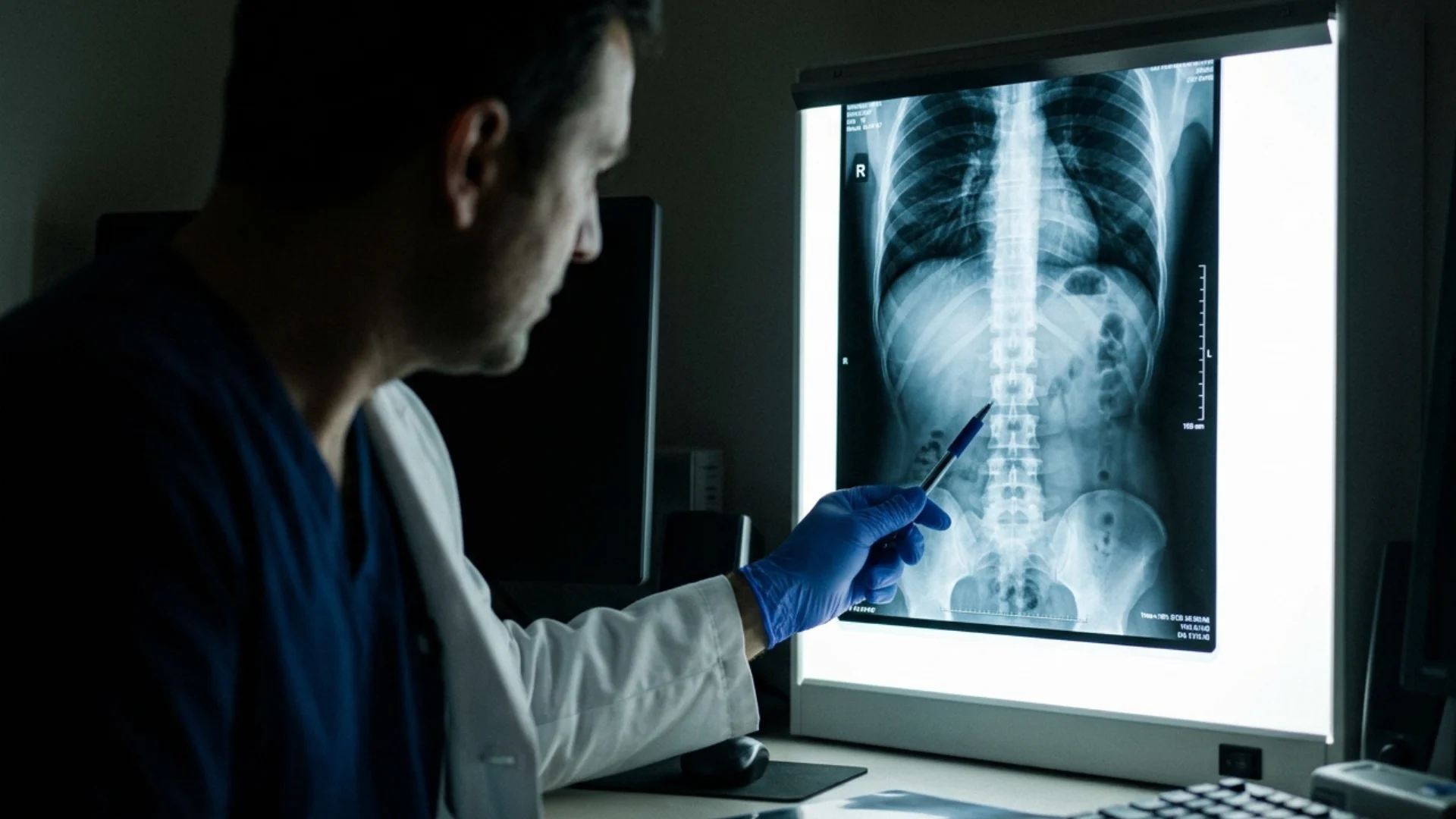
Spondylolisthesis Treatment in New York
A New York spondylolisthesis specialist brings neurosurgical and orthopedic perspectives to your evaluation before any treatment path is recommended for you.
What is spondylolisthesis ?
Spondylolisthesis means one vertebra has slipped out of its normal position relative to the vertebra below it. It is a shift of bone, not a bulging disc. It most often affects the lower spine and may reduce space around nearby nerves.
Spondylolysis is a pars stress fracture that can lead to a slip. It describes age-related degenerative wear that may contribute to degenerative slippage. Treatment depends on the type and severity of slip, whether it is unstable, and whether nerves are compressed.
See how it is treated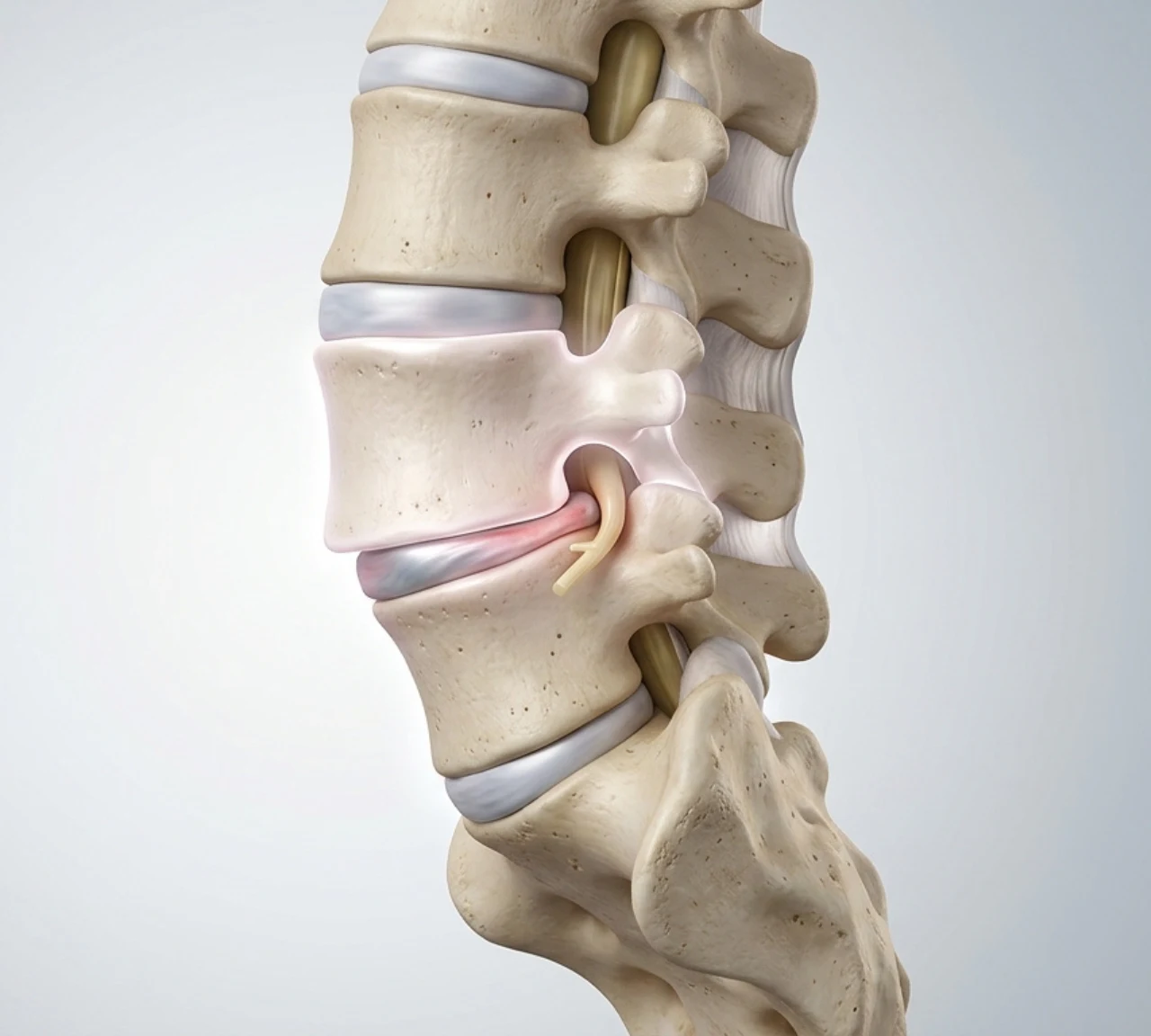
Spondylolisthesis symptoms
Some slips cause no symptoms. Others affect how your lower back feels, how long you can stand, or how comfortably you walk.
Pain while upright
Lower back or buttock pain may increase with standing, walking, activity, or bending backward.
Tingling or numbness in the legs
Pain, tingling, or numbness can reach one or both legs when a narrowed space affects a nerve.

Tightness when walking
Tight hamstrings or thighs may shorten your stride and pull you into a slight crouch.

Back feels unsteady
You may sense that your back catches or shifts during movement. Increasing leg weakness needs prompt assessment.
What causes a vertebra to slip ?
The mechanism is not the same for every age group. Repetitive stress, gradual joint and disc changes, spinal development, trauma, and earlier operations can each affect stability over time.
Book an Appointment →-
01
Diagnosis and treatment are based on slip grade, symptoms, stability on dynamic imaging, and nerve involvement.
01. Repetitive stress injury
-
02
Repeated back extension can fracture the pars in young athletes and permit later slippage.
02. Age-related degeneration
-
03
Disc height loss and facet arthritis can weaken support and allow gradual adult slippage.
03. Developmental anatomy
-
04
A thin pars or differently formed lumbosacral structures can increase susceptibility to displacement.
04. Significant trauma
-
05
A fracture involving the supporting parts of a vertebra can produce a sudden loss of stability.
05. Changes after surgery
-
06
Movement beside a previous fusion or continued slippage after treatment requires focused revision evaluation.
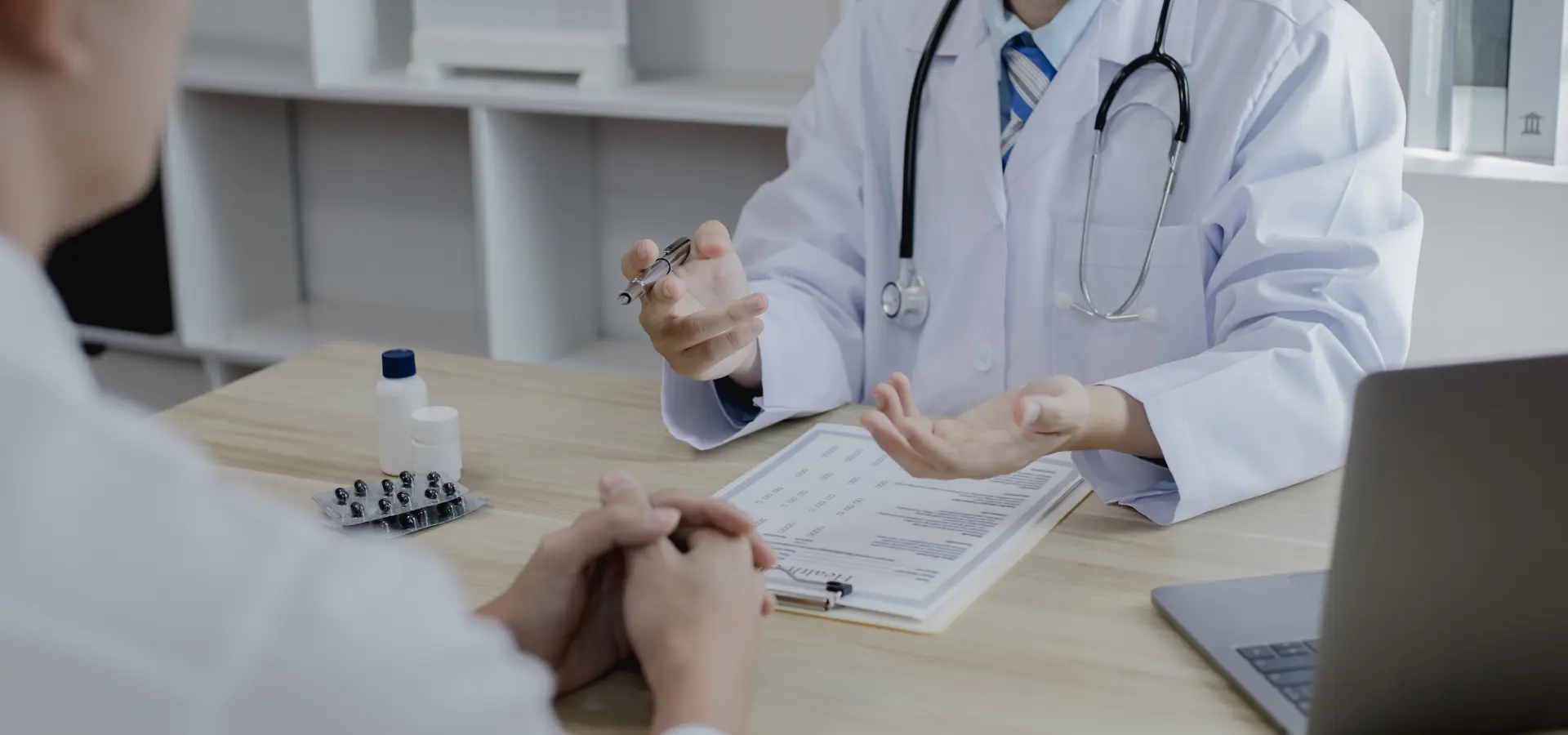
How is spondylolisthesis diagnosed?
Your symptoms come first
We review pain patterns, relieving positions, activities, injuries, prior care, walking changes, and nerve function.
See the spine under load
Standing flexion and extension X rays show whether the vertebra moves. MRI or CT is added only when detail can change decisions.
Neurosurgical and orthopedic review
An orthopedic spine surgeon assesses alignment and stability. A neurosurgeon considers nerve function and compression. Both review the same case.
Treatment matched to the diagnosis
You receive an easy-to-understand explanation of the slip, its grade and stability, and the reasoning behind each appropriate option.
Spondylolisthesis treatment, from conservative care to surgery
Stable, low-grade slips usually begin with rehabilitation and activity changes. Surgery enters the discussion only when movement, progression, or nerve pressure matches your symptoms.
Nonsurgical care
Reduce symptoms and improve control
- Physical therapy focused on core strength, hip strength, flexibility, and controlled movement.
- Temporary changes to activities that trigger symptoms, especially repeated backward bending.
- A brace for selected younger patients based on growth stage and injury.
- Image-guided injections when an affected nerve is causing persistent leg pain.
Surgical treatments
Address nerve pressure or instability
- Decompression to create more room for an affected nerve.
- Fusion when movement at the slipped level requires stabilization.
- Minimally invasive interbody surgery for selected patterns of slippage and nerve narrowing.
- Reduction and reconstruction when a higher grade or complex slip warrants realignment.

When it cannot wait: sudden loss of bladder or bowel control, new numbness around the groin or inner thighs, or rapidly increasing weakness in both legs can indicate cauda equina syndrome. Call 911 or go to the nearest emergency department now.
Doctors who treat Spondylolisthesis in New York
Throughout the New York metro area, our spondylolisthesis surgeons bring academic level training to new diagnoses, second opinions, and complex cases after previous treatment.
Debra Petrucci, MD

Jay Reidler, MD

John A. Grant, MD

John F. Morrison, MD

Joshua Adjei, MD

M. Mehdi Kazmi, MD

Marc Dyrszka, MD

Murat Cosar, MD

Nicholas Post, MD

Simon Morr, MD

Yigal Samocha, MD