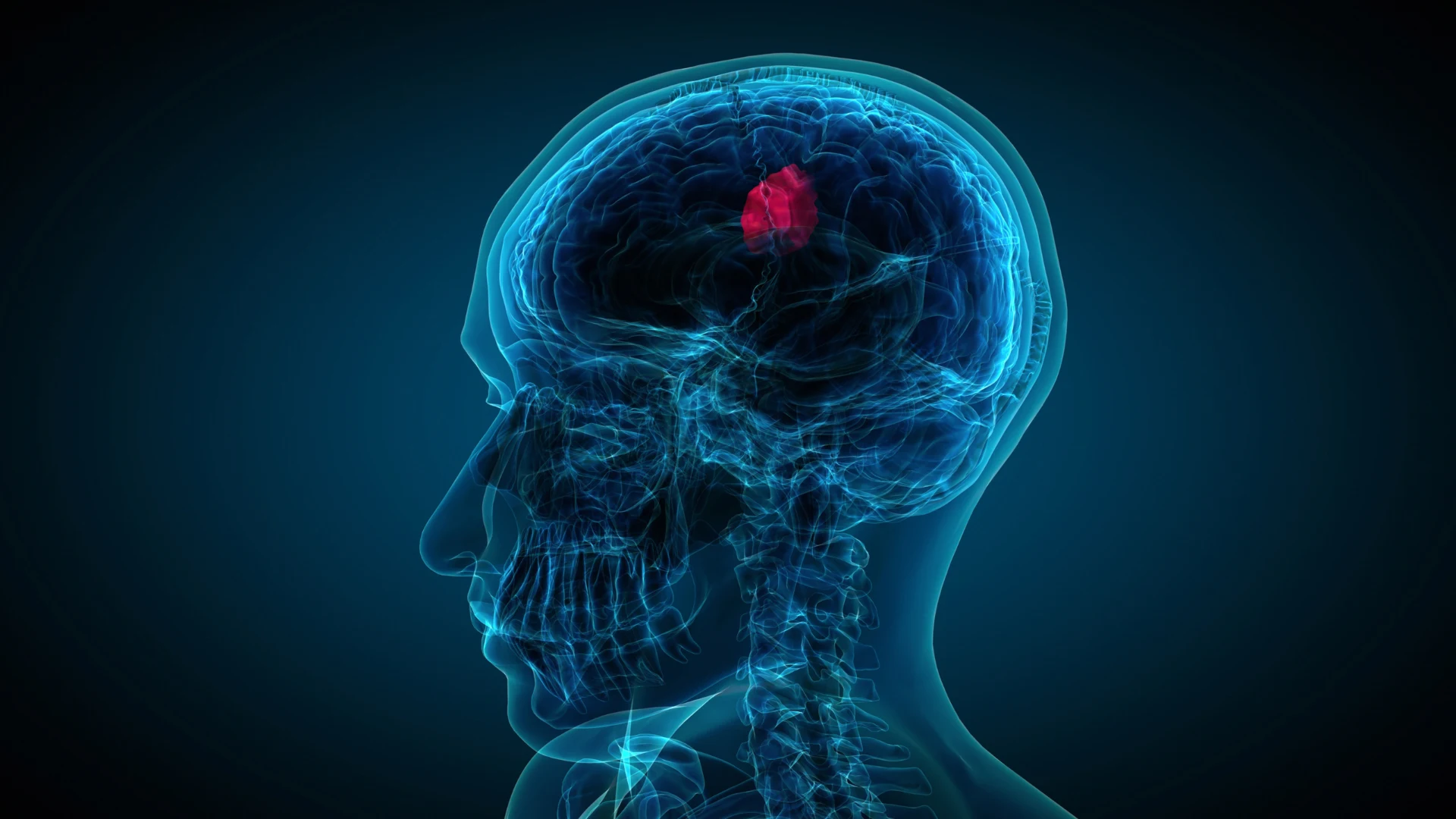
Skull Base Tumors Treatment in New York
Our New York skull base tumors surgeons review your case together, matching each tumor to the least invasive route, from watchful monitoring through to surgery.
What is skull base tumors ?
Skull base tumors are grouped by where they grow, not by what kind of tumor they are. The base of the skull is the bony floor the brain rests on, and it is one of the most crowded places in the body. What makes growth there difficult is its location, not its size.
Nearly every nerve and blood vessel going to or from the brain passes through a narrow opening in that floor. So even a tiny tumor there can affect vision, hearing, swallowing, facial feeling, or balance. Knowing exactly which of those it touches is what the treatment plan depends on.
See how it is treated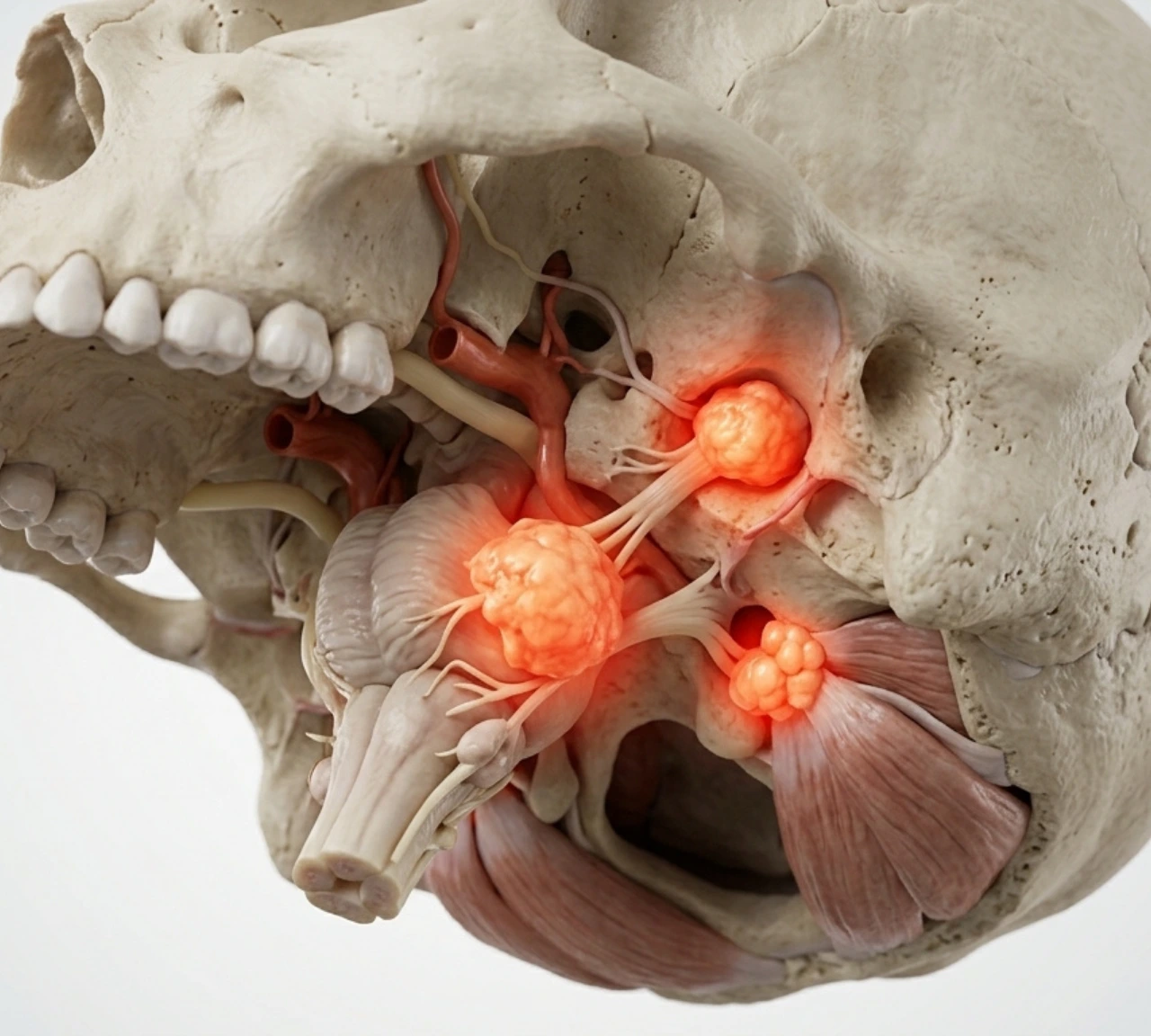
Skull base tumors symptoms
Because these tumors press on nerves rather than the brain itself, the symptoms often name the nerve involved. These are the most common ones.

Double vision or a drooping eyelid
Pressure on the nerves that move the eye, so images split or one eyelid begins to droop.

Facial numbness or pain
Numbness or pain across part of the face, from the sensation nerve, sometimes mistaken at first for a dental problem.

Hearing loss, ringing, or unsteadiness on one side
A drop in hearing, ringing, or being off balance, all on the same side, pointing to the hearing and balance nerve.

Swallowing, voice, or tongue changes
New difficulty swallowing, a hoarse voice, or a weak tongue deserves prompt review, as it involves the lower nerves.
What causes a tumor at the base of the skull ?
Skull base tumors are usually benign and slow-growing, and just a few types make up most cases.
Book an Appointment →-
01
Meningioma of the skull base
The most common tumor here, growing from the covering of the brain along the skull floor.
-
02
Vestibular schwannoma and other nerve-sheath tumors
Growths on the insulating layer of a nerve, most often the hearing and balance nerve.
-
03
Pituitary and parasellar tumors
Growths in and beside the pituitary gland that extend into this region.
-
04
Chordoma and chondrosarcoma of the clivus
Rarer tumors of the clivus, the central bone there, which need specialised planning.
-
05
A tumor that has recurred
Prior surgery or radiation changes anatomy, so complex revision skull base work needs a new access plan.

How are skull base tumors diagnosed?
Your history and a cranial-nerve exam
We check vision, hearing, facial feeling, swallowing, and balance, since which nerves are affected points to where the tumor lies.
Imaging chosen for the surgical question
An MRI shows the tumor itself, and a CT shows the bone around it. We add more imaging only when it could change the route we take to the tumor or the structures we have to protect, not to repeat a scan that tells us the same thing.
Reviewed by the full skull base team
A neurosurgeon and an orthopaedic spine surgeon review the case together, alongside ENT, ophthalmology, and endocrinology as the tumor requires.
A plan with the real options laid out
A skull base tumors specialist explains the diagnosis, what can be watched, what needs treatment, and whether skull base surgery deserves consideration.
Skull base tumors treatment, from conservative care to surgery
Skull base tumors treatment depends on type, growth, symptoms, and route, with monitoring, radiation, medicine, or surgery chosen case by case.
Monitoring and non-surgical care
For some tumors, this is the first choice
- Scheduled imaging monitoring for small, stable tumors that are not causing symptoms.
- Stereotactic radiosurgery or radiation therapy in coordination with radiation oncology.
- Symptom care with ENT, ophthalmology, endocrinology, hearing, voice, or balance specialists.
- Medical therapy where the tumor type allows, such as selected pituitary tumors.
Surgery, when needed
Surgery follows the safest route
- Endoscopic endonasal approaches through the nose for selected midline tumors.
- Open skull base approaches for tumors involving the sides of the skull base.
- Nerve monitoring throughout surgery to protect facial movement, hearing, and swallowing.
- Staged and revision surgery for complex or recurrent skull base tumors.

When it cannot wait: sudden double vision or vision loss, sudden facial weakness, new trouble swallowing or breathing, or worsening headache with vomiting and drowsiness needs emergency care. Call 911 or go to the nearest emergency department immediately.
Doctors who treat Skull Base Tumors in New York
Our skull base tumors specialists are academically trained neurosurgeons and orthopaedic spine surgeons who review each case together across the New York metro area.