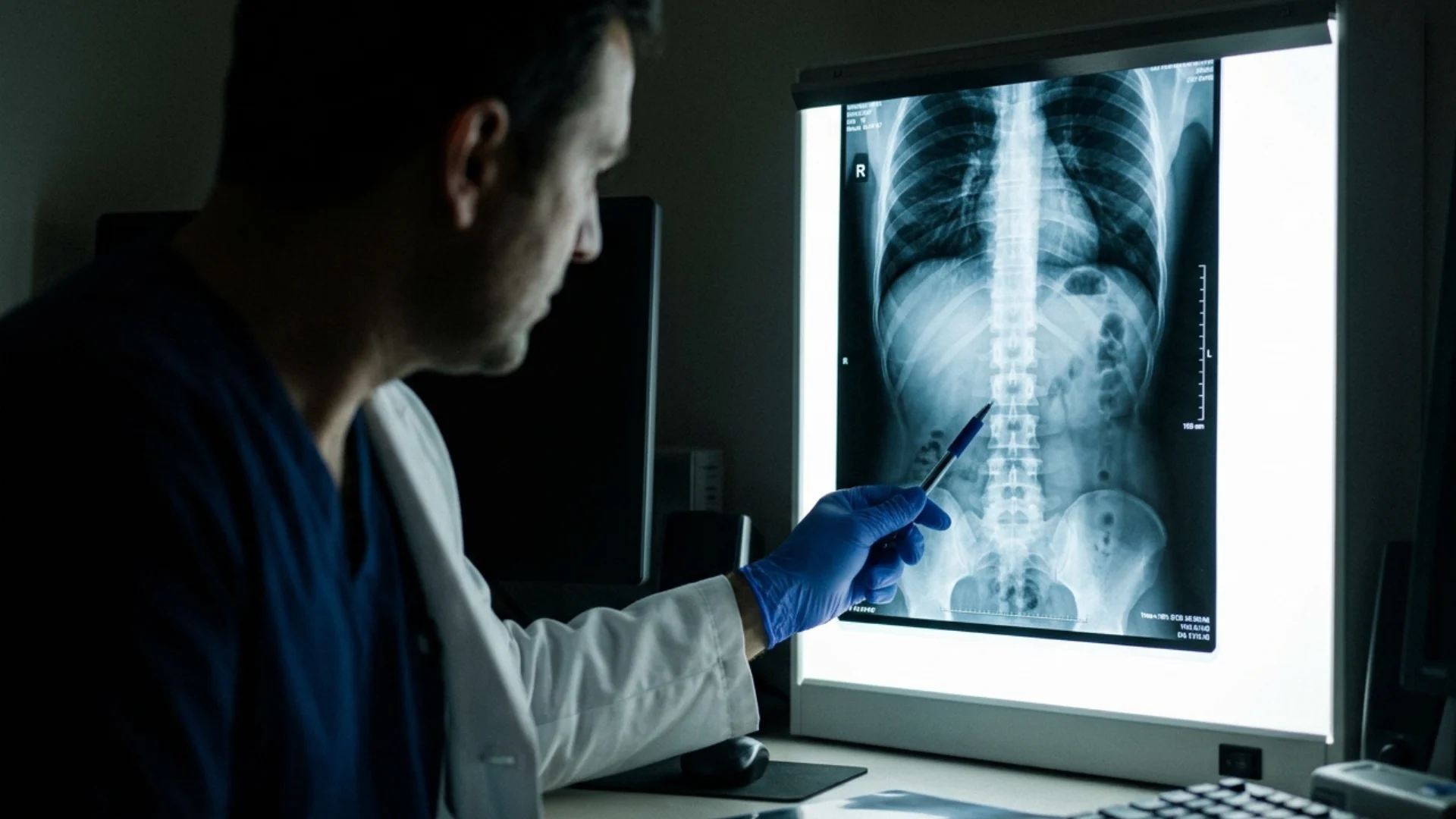
Ankylosing Spondylitis Treatment in New York
Our New York ankylosing spondylitis specialists work alongside your rheumatologist, stepping in for the spine problems this inflammatory disease can bring.
What is ankylosing spondylitis ?
The spine disease ankylosing spondylitis is driven by inflammation, not wear. The immune system inflames the joints where the spine meets the pelvis, then the spine itself. So the pain eases with movement and flares with rest, the reverse of ordinary back pain.
Over years, the body can bridge those inflamed joints with fresh bone, and the spine slowly stiffens into a single column. The earlier and more accurately it is caught, the more treatment can work.
See how it is treated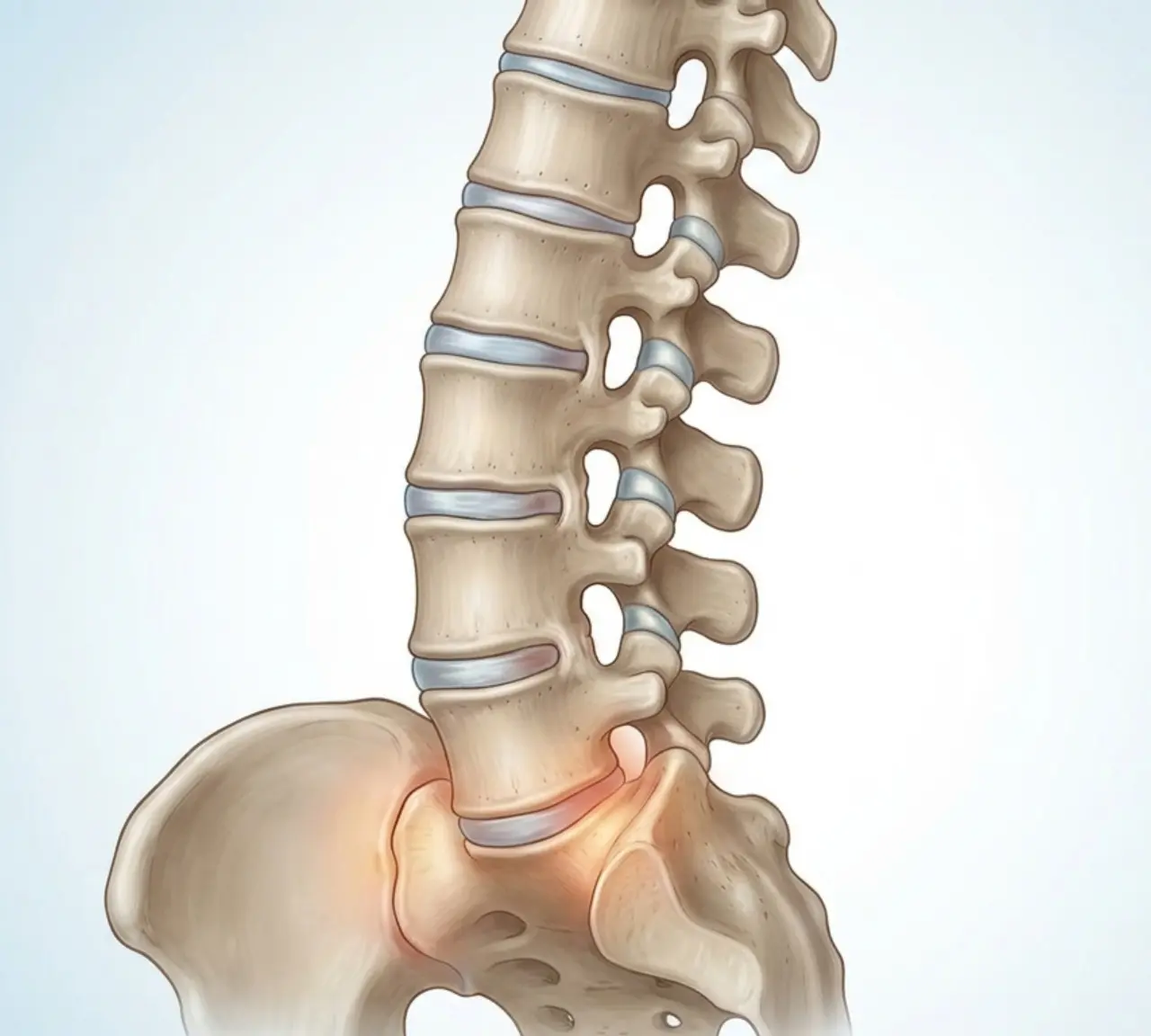
Ankylosing spondylitis symptoms
The pattern here is unusual. Rest makes it worse, and movement makes it better, the opposite of most back pain.

Stiffness that is worst in the morning
An hour or more of stiffness on waking that loosens as you get moving, rather than tightening as the day goes on.

Pain that eases with exercise
Activity tends to settle the pain instead of aggravating it, which is the reverse of an ordinary mechanical back.

Pain that wakes you after midnight
A deep ache that rouses you in the second half of the night, a pattern that points to inflammation.

Lost movement and a stooping posture
A forward stoop develops slowly over years. A sudden change, or any new weakness, needs prompt evaluation.
What causes inflammatory arthritis of the spine ?
This is an inherited tendency toward inflammation, set off by triggers still being studied. A few common factors run through most cases.
Book an Appointment →-
01
An inherited immune tendency
A strong link to the HLA-B27 genetic marker, the central factor behind the disease.
-
02
Family history
Having a close relative with the condition substantially raises your own risk.
-
03
A self-sustaining immune process
Once it is triggered, the inflammation in the spinal joints tends to keep itself going.
-
04
Linked inflammation elsewhere
Inflammation of the eye, bowel, or skin often appears alongside the spinal disease.
-
05
Structural damage after years
After years, a stiffened spine can fracture or lock into a severe stoop. That is where surgery is reviewed.

How is ankylosing spondylitis diagnosed?
History and exam
Because the pain runs backwards to normal, we ask about morning stiffness, night pain, and family history, then test how far the spine and chest can move.
Reading the tests you already have
We do not repeat a rheumatology work-up that has already been done; we read it, and add spine imaging only where a structural question needs answering.
Two specialties on one case
Your case is read by a neurosurgeon and an orthopaedic spine surgeon together, alongside your rheumatologist, so the medical and structural sides are weighed as one.
A care plan explained in plain language
You leave clear on what belongs to medical care, what belongs to the spine team, and what the first step is.
Ankylosing spondylitis treatment, from conservative care to surgery
The disease itself is managed medically, usually with rheumatology. Spine surgery is reserved for structural consequences, such as a fracture or a severe fixed deformity.
Medical care, led by rheumatology
How the disease itself is managed
- Coordinated care with your rheumatologist to control the inflammation.
- Physical therapy for posture, chest expansion, and keeping the spine moving.
- A bone health assessment, since a stiffened spine fractures more easily.
- Pain management alongside the medical plan.
Surgery, for the structural consequences
Reserved for fracture or fixed deformity
- Fixation of a fracture through a stiffened spine.
- Osteotomy and realignment for a severe fixed stoop.
- Decompression where the canal has narrowed.
- Revision surgery in a previously operated deformity.

When it cannot wait: new neck or back pain after even a minor fall or knock, because a stiffened spine can fracture under even light force. New weakness, numbness, or a change in bowel or bladder control also needs emergency care. Call 911 or go to the nearest emergency department right away.
Doctors who treat Ankylosing Spondylitis in New York
Working alongside rheumatology, our neurosurgeons and orthopaedic spine surgeons bring academic-level training to patients across the New York metro area.