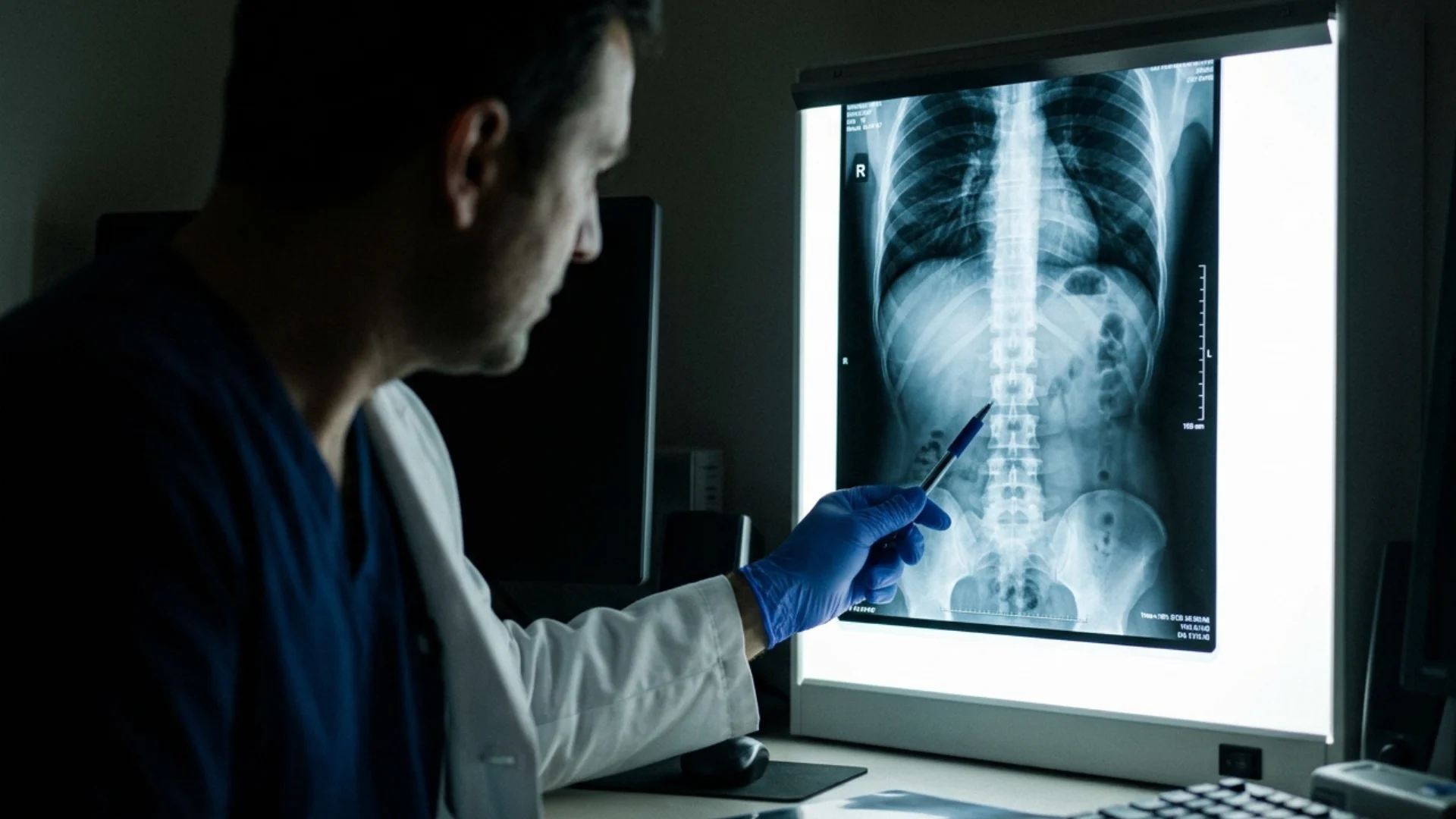
Thoracic Spine (Middle Back) Pain Treatment in New York
Our New York thoracic spine pain specialists combine their perspectives to identify the least invasive treatment appropriate for your condition.
What is thoracic spine pain ?
Thoracic spine pain affects your middle back, the least mobile part of the spine. Twelve thoracic vertebrae connect to the ribs, limiting movement and helping protect the discs. Because disc problems are less common here, the muscles, joints, ribs, ligaments, and vertebral bones often require closer attention.
This region behaves differently from Lower Back Pain and Neck Pain. Symptoms can also come from outside the spine. Understanding exactly which structure is involved, rather than relying on pain location alone, is what makes thoracic spine pain treatment work.
See how it is treated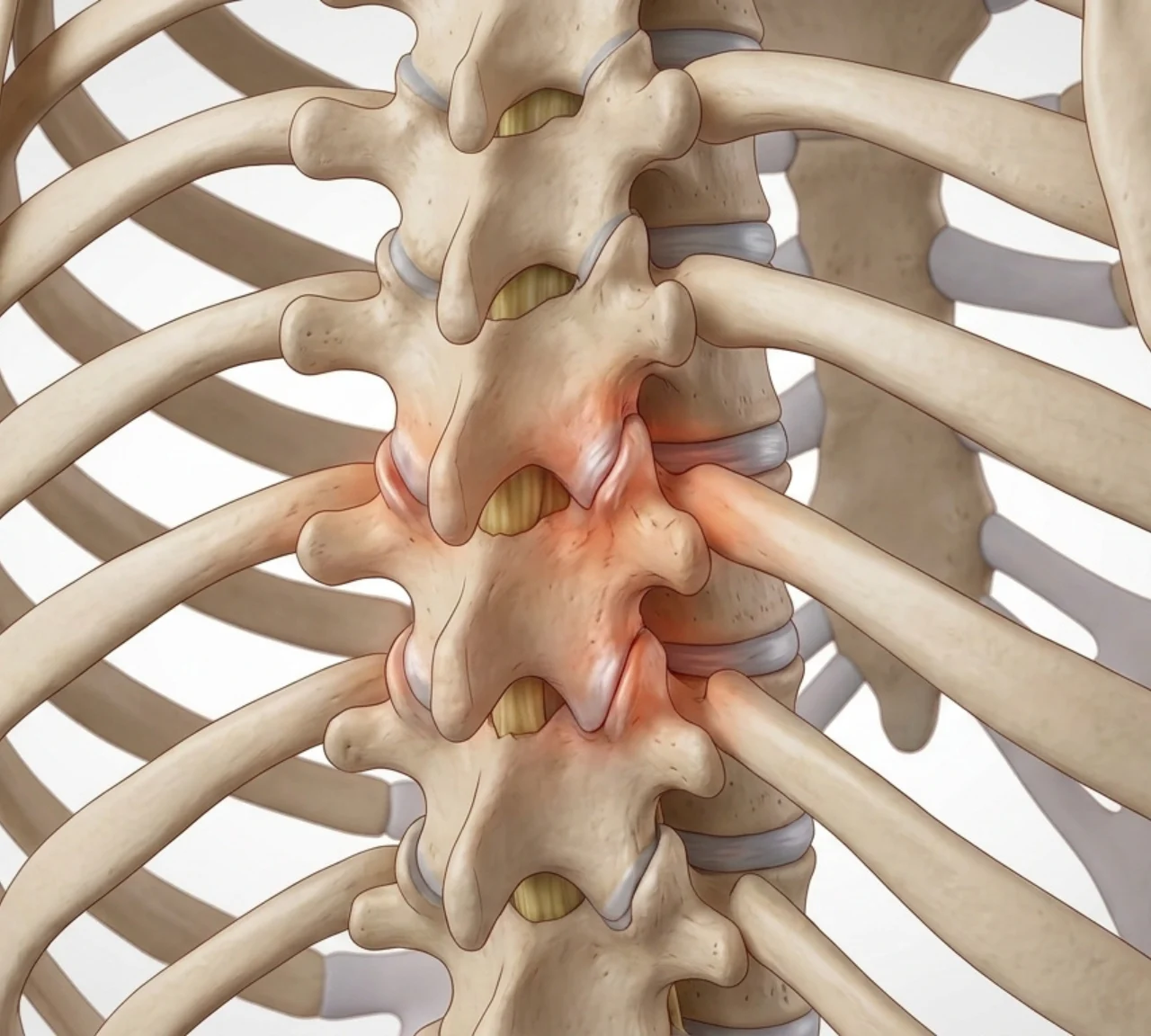
Thoracic spine pain symptoms
Pain in the thoracic spine may fluctuate or persist, depending on whether muscles, joints, discs, bones, or nerves are involved.

Aching near the shoulder blades
Aching, burning, or throbbing soreness between or below your shoulder blades that worsens after holding one posture.

Pain around the ribs
Discomfort may spread from your middle back around the ribs toward your chest or side.

Pain with movement
A deep breath or twist moves the rib joints and may reproduce sharp pain, stiffness, or muscle tightness.
Sudden severe pain
Intense pain after a small movement can indicate a compression fracture and deserves prompt evaluation, especially with osteoporosis.
What causes middle back pain ?
Thoracic spine pain can start in muscles, ligaments, joints, vertebral bones, discs, or nerves. We evaluate the entire picture rather than assuming an imaging finding explains your symptoms.
Book an Appointment →-
01
01. Postural and muscular strain
Prolonged desk work, screen use, poor posture, and muscle imbalance commonly cause aching or fatigue.
-
02
02. Rib or facet irritation
The joints where the ribs meet the spine can become painful during breathing, reaching, or twisting.
-
03
03. Vertebral compression fracture
A weakened vertebral body can collapse, particularly when osteoporosis has reduced the strength of the bone.
-
04
04. Thoracic disc herniation
A damaged disc can press on a nerve or the spinal cord within the relatively narrow canal.
-
05
05. Complex or nonspinal causes
Infection, tumor, previous surgery, or referred chest or abdominal pain requires a broader specialist evaluation.

How is thoracic spine pain diagnosed?
Your initial assessment
We ask about your symptoms, general health, previous treatment, and injuries, then examine movement, strength, sensation, posture, and painful areas.
Selective imaging review
Because middle back pain may come from outside the spine, we review your overall health before deciding whether spinal imaging is appropriate.
Neurosurgical and orthopedic insight
Neurosurgeons and orthopedic spine surgeons work together to understand your middle back symptoms.
Your personalized treatment plan
We explain the likely cause, appropriate tests, treatment choices, and reasons behind our recommendation in plain language.
Thoracic spine pain treatment, from conservative care to surgery
Thoracic spine pain caused by posture, muscle strain, or joint irritation often improves with nonsurgical care. Structural or nonspinal causes may need prompt treatment.
Conservative treatment
Care that begins without surgery
- Physical therapy for thoracic mobility, strength, posture, flexibility, and shoulder blade control.
- Brief rest when appropriate, followed by activity and ergonomic changes that reduce repeated strain.
- Medication to manage pain, inflammation, or muscle spasms when medically appropriate.
- Image guided injections when the examination confirms a specific rib or facet joint source.
Surgical treatments
When a structural problem requires it
- Vertebral augmentation for a painful compression fracture.
- Decompression for a thoracic disc herniation or narrowing.
- Stabilization for fracture or instability.
- Surgery for a tumor or infection of the thoracic spine.

When it cannot wait: chest pain, tearing pain between the shoulder blades, shortness of breath, sudden severe pain after minimal effort, fever with back pain, or new leg weakness or numbness needs emergency care. Call 911 or go to the nearest emergency department right away.
Doctors who treat Thoracic Spine (Middle Back) Pain in New York
Our New York thoracic spine surgeons and neurosurgeons see patients across the metro area, and neither specialty settles a middle back diagnosis without the other.